Maritime History
Kerala backwaters
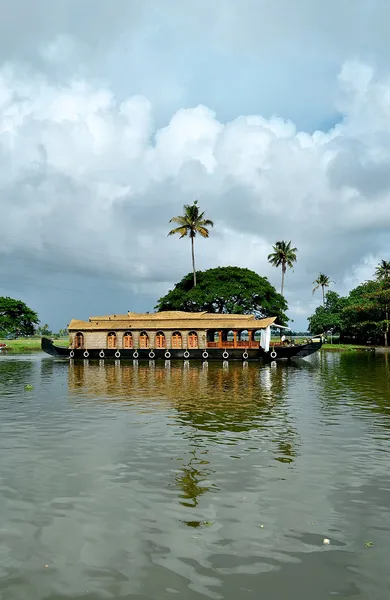
The Kerala backwaters are a network of brackish lagoons and canals running parallel to the Arabian Sea along the Malabar Coast of Kerala, India. It also includes interconnected lakes, rivers, and inlets, a labyrinthine system formed by more than 900 km (560 mi) of waterways, and is sometimes compared to bayous. The network includes five large lakes linked by canals, both artificial and natural, fed by 38 rivers, and extending virtually half the length of the Kerala state. The backwaters were formed by the action of waves and shore currents, creating low barrier islands across the mouths of the many rivers flowing down from the Western Ghats range. In the midst of this landscape, there are a number of towns and cities, which serve as the start and end points of backwater cruises. There are 34 backwaters in Kerala. Of these, 27 are located either closer to the Arabian Sea or parallel to the sea. The remaining 7 are inland navigation routes. The backwaters have a unique ecosystem: Freshwater from the rivers meets the seawater from the Arabian Sea. A barrage has been built near Thanneermukkom, so saltwater from the sea is prevented from entering deep inside, keeping the freshwater intact. Such freshwater is extensively used for irrigation purposes. Many unique species of aquatic life including crabs, frogs and mudskippers, water birds such as terns, kingfishers, darters and cormorants, and animals such as otters and turtles live in and along the backwaters. Palm trees, pandanus shrubs, various leafy plants, and bushes grow alongside the backwaters, providing a green hue to the surrounding landscape.
Also on this shelf
HMS Mauritius (80).
HMS Babet.
See also
Uncatalogued shelfText from Wikipedia; plate via Wikimedia Commons. Text CC BY-SA 4.0; plate freely licensed (see Commons). Source record. Images and catalogue data are reproduced from open-access collections.