Maritime History
French expedition to Ireland (1796)
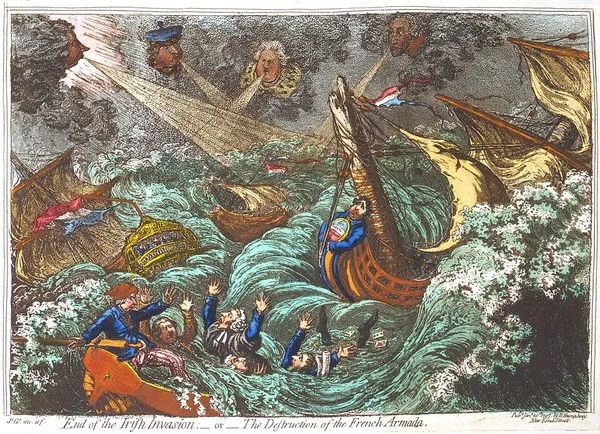
The French expedition to Ireland, known in French as the Expédition d'Irlande (French pronunciation: [ɛkspedisjɔ̃ diʁlɑ̃d], "Expedition to Ireland"), was an unsuccessful attempt by the French Republic to assist the outlawed Society of United Irishmen in their planned rebellion against British rule during the War of the First Coalition. France intended to land a large expeditionary force in Ireland during the winter of 1796–1797 which would join forces with the United Irishmen and overthrow British rule in Ireland. The French anticipated that a successful invasion would not only be a major blow to British morale, prestige and military effectiveness but allow for Ireland to serve as a staging point for an eventual invasion of Britain. In late 1796, the French Directory gathered a force of between 12,000 and 25,000 French Revolutionary Army troops at Brest under General Lazare Hoche in readiness for a landing at Bantry Bay in December. The operation was launched during one of the stormiest winters of the 18th century, which the French navy was unprepared to deal with. Patrolling British frigates observed the departure of the fleet and notified the Royal Navy's Channel Fleet, most of which was sheltering at Spithead for the winter. The French invasion fleet was subject to confused orders as it left port and was scattered across the approaches to Brest: one ship was wrecked with heavy loss of life and the others widely dispersed. Separated, most of the invasion fleet managed to reach Bantry Bay late in December, but its commanders were driven miles off course and without them the fleet was unsure of what action to take, with amphibious landings impossible due to the weather conditions, which were the worst recorded since 1708. Within a week the fleet had broken up, with small squadrons and individual ships making their way back to Brest through storms, fog and British patrols. British warships were largely unable to interfere with the French invasion fleet due in part to the bad weather. A few vessels operating from Cork captured isolated French warships and transports, but the only significant British response came from Captain Sir Edward Pellew, who was able to force the wrecking of the French ship of the line Droits de l'Homme in the action of 13 January 1797.
Also on this shelf
Albert Falco.
Action of 18 October 1806.
See also
Uncatalogued shelfText from Wikipedia; plate via Wikimedia Commons. Text CC BY-SA 4.0; plate freely licensed (see Commons). Source record. Images and catalogue data are reproduced from open-access collections.