Maritime History
Cyprus mutiny
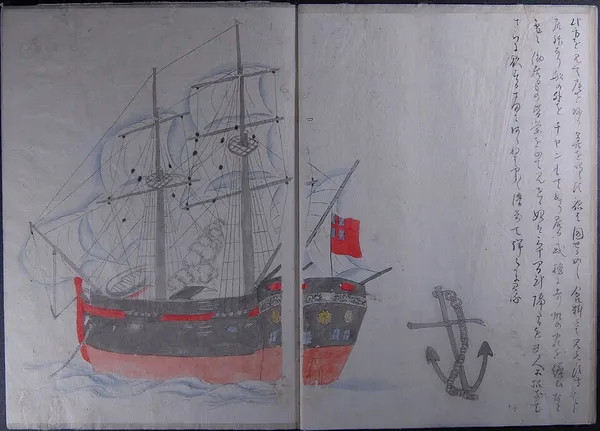
The Cyprus mutiny took place on 14 August 1829 in Recherche Bay off the British penal settlement of Van Diemen's Land (now Tasmania, Australia). Convicts seized the brig Cyprus and sailed her to Canton, China, where they scuttled her and claimed to be castaways from another vessel. On the way, Cyprus visited Japan during the height of the period of severe Japanese restrictions on the entry of foreigners, the first ship from Australia to do so. Several of the mutineers were eventually captured. Two of them, George James Davis and William Watts, were hanged at Execution Dock, London on 16 December 1830, the last men hanged for piracy in Britain. Their leader, William Swallow, was never convicted of piracy because he convinced the British authorities that, as the only experienced sailor, he had been forced to remain onboard and coerced to navigate the ship. Swallow was instead sentenced to life on Van Diemen's Land for escaping, where he died four years later. Swallow wrote an account of the voyage including the visit to Japan, but this part of the journey was generally dismissed as fantasy until 2017, when he was vindicated by an amateur historian's discovery that the account matched Japanese records of a "barbarian" ship flying a British flag whose origins had remained a mystery for 187 years.
Also on this shelf
HMS Révolutionnaire.
Indira Nagar, Chennai.
See also
Uncatalogued shelfText from Wikipedia; plate via Wikimedia Commons. Text CC BY-SA 4.0; plate freely licensed (see Commons). Source record. Images and catalogue data are reproduced from open-access collections.