Maritime History
Chesapeake Affair
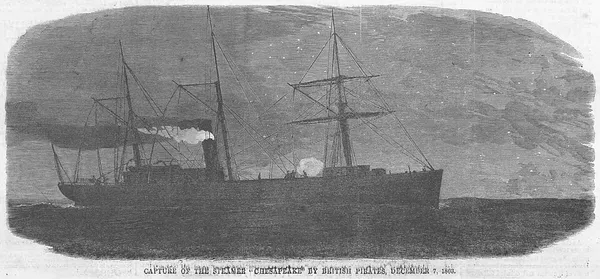
The Chesapeake Affair was an international diplomatic incident that occurred during the American Civil War. On December 7, 1863, Confederate sympathizers from the British colonies Nova Scotia and New Brunswick captured the American steamer Chesapeake off the coast of Cape Cod. The expedition was planned and led by Vernon Guyon Locke (1827–1890) of Nova Scotia and John Clibbon Brain (1840–1906). When George Wade of New Brunswick killed one of the American crew, the Confederacy claimed its first fatality in New England waters. The Confederate sympathizers had planned to re-coal at Saint John, New Brunswick, and head south to Wilmington, North Carolina. Instead, the captors had difficulties at Saint John; so they sailed further east and re-coaled in Halifax, Nova Scotia. U.S. forces responded to the attack, violating British sovereignty by trying to arrest the captors in Nova Scotian waters. International tensions rose. Wade and others were able to escape through the assistance of William Johnston Almon, a prominent Nova Scotian and Confederate sympathizer. The Chesapeake Affair was one of the most sensational international incidents that occurred during the American Civil War. The incident briefly threatened to bring the British Empire into the war against the North.
Also on this shelf
Fort Amherst, St. John's.
Kachchaleswarar Temple.
See also
Uncatalogued shelfText from Wikipedia; plate via Wikimedia Commons. Text CC BY-SA 4.0; plate freely licensed (see Commons). Source record. Images and catalogue data are reproduced from open-access collections.