Maritime History
History of radar
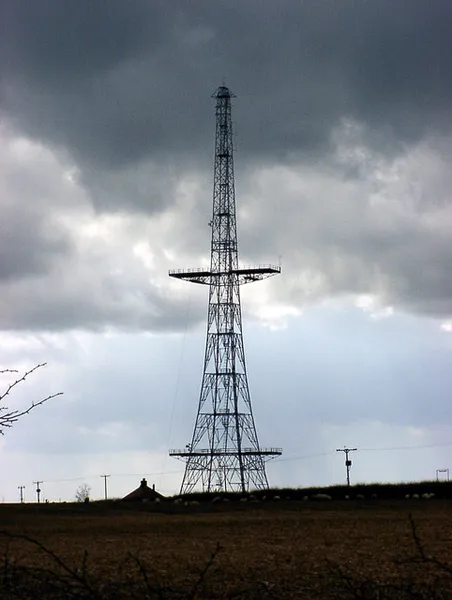
The history of radar (where radar stands for radio detection and ranging) started with experiments by Heinrich Hertz in the late 19th century that showed that radio waves were reflected by metallic objects. This possibility was suggested in James Clerk Maxwell's seminal work on electromagnetism. However, it was not until the early 20th century that systems able to use these principles were becoming widely available, and it was German inventor Christian Hülsmeyer who first used them to build a simple ship detection device intended to help avoid collisions in fog (Reichspatent Nr. 165546 in 1904). True radar which provided directional and ranging information, such as the British Chain Home early warning system, was developed over the next two decades. The development of systems able to produce short pulses of radio energy was the key advance that allowed modern radar systems to come into existence. By timing the pulses on an oscilloscope, the range could be determined and the direction of the antenna revealed the angular location of the targets. The two, combined, produced a "fix", locating the target relative to the antenna. In the 1934–1939 period, eight nations developed independently, and in great secrecy, systems of this type: the United Kingdom, Germany, the United States, the USSR, Japan, the Netherlands, France, and Italy. In addition, Britain shared their information with the United States and four Commonwealth countries: Australia, Canada, New Zealand, and South Africa, and these countries also developed their own radar systems. During the war, Hungary was added to this list. The term RADAR was coined in 1939 by the United States Signal Corps as it worked on these systems for the Navy. Progress during the war was rapid and of great importance, probably one of the decisive factors for the victory of the Allies. A key development was the magnetron in the UK, which allowed the creation of relatively small systems with sub-meter resolution. By the end of hostilities, Britain, Germany, the United States, the USSR, and Japan had a wide variety of land- and sea-based radars as well as small airborne systems. After the war, radar use was widened to numerous fields, including civil aviation, marine navigation, radar guns for police, meteorology, and medicine.
Also on this shelf
HMS Implacable (1805).
Austronesian sail types.
See also
Uncatalogued shelfText from Wikipedia; plate via Wikimedia Commons. Text CC BY-SA 4.0; plate freely licensed (see Commons). Source record. Images and catalogue data are reproduced from open-access collections.