Maritime History
HMS Janus (1778)
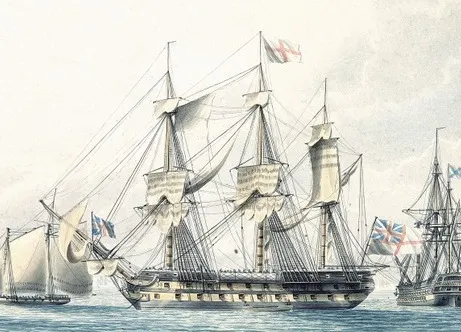
HMS Janus was a 44-gun fifth-rate Roebuck-class ship of the Royal Navy. While participating in the American Revolutionary War, the ship joined the Jamaica Station in 1779. Employed patrolling the West Indies, Janus fought an action off the coast of Monte Cristi in March 1780 in which her squadron was chased away from a French convoy by its escorts. Horatio Nelson was given command of Janus in May, but never took the ship to sea as he was ill with malaria. Janus returned to Britain in September 1782; while the ship was undergoing a refit in March 1783 her crew mutinied over concerns they were not going to be paid off. Janus was converted into a storeship and renamed Dromedary in 1788. With the French Revolutionary Wars underway, the ship returned to the West Indies and took part in the invasion of Martinique in February 1794. By 1797 the ship was stationed in the Mediterranean, where she became known for incompetence amongst her officers and crew, resulting in her captain being dismissed by a court-martial. Dromedary was travelling from Grenada to Trinidad on 10 August 1800 with urgent reinforcements for the garrison there. Sailing through the Bocas del Dragón in the evening, the wind dropped away and the strong current pushed Dromedary onto the rocks off Huevos, wrecking her. The 500 crew and passengers on board all survived. After they had disembarked on to the rocks, the ship fell on to her side and broke in half. The crew was subsequently deemed not to be at fault for the loss of Dromedary.
Also on this shelf
Chesapeake Affair.
Economy of the Cayman Islands.
See also
Uncatalogued shelfText from Wikipedia; plate via Wikimedia Commons. Text CC BY-SA 4.0; plate freely licensed (see Commons). Source record. Images and catalogue data are reproduced from open-access collections.