Maritime History
Anglo-Indian people
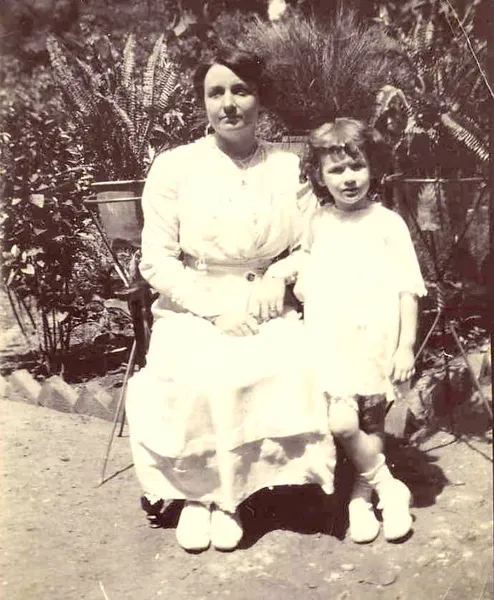
Anglo-Indian people are a distinct Indian minority community of mixed-race British and Indian ancestry. During the colonial period their ancestry was defined by British paternal and Indian maternal heritage; in the period subsequent to the British Raj, the term Anglo-Indian has also encompassed other European and Indian ancestries. Anglo-Indians' first language is English. In the nineteenth century, various designations such as Eurasian or Indo-Briton were used to describe this community, while Anglo-Indian was primarily used for white Britons in India. Since 1911, Anglo-Indian has been used primarily for mixed race individuals with paternal British and Indian maternal ancestry while white Britons living in India were classed separately as European. The All India Anglo-Indian Association, founded in 1926, has long represented the interests of this ethnic group; it holds that Anglo-Indians are unique in that they are Christians, speak English as their mother tongue, and have a historical link to both the British Isles and the Indian sub-continent. Starting with the arrival of the East India Company, people of mixed British and Indian descent originated from children born to unions between British fathers and Indian mothers from the 17th century onwards. This new ethnic group formed a small yet significant portion of the population and became well represented in certain administrative roles. Anglo-Indians were mostly isolated and faced discrimination both British and Indian society, and over time formed a distinct group. Their documented numbers dwindled from roughly 300,000 at the time of independence in 1947 to about 125,000–150,000 in modern-day India due to emigration as well as assimilation. During much of the time that Britain ruled India (the Raj), British-Indian relationships faced stigma, which meant that the ethnicity of some Anglo-Indians was undocumented or identified incorrectly. As such, many have adapted to local communities in India or emigrated to the United Kingdom, Australia, Canada, the United States, South Africa and New Zealand. Similar communities can also be seen in other parts of the world, although in smaller numbers, such as Anglo-Burmese in Myanmar and Burghers in Sri Lanka.
Also on this shelf
HMAS Nestor.
Floyd Bennett Field.
See also
Uncatalogued shelfText from Wikipedia; plate via Wikimedia Commons. Text CC BY-SA 4.0; plate freely licensed (see Commons). Source record. Images and catalogue data are reproduced from open-access collections.