Maritime History
Austronesian vessels
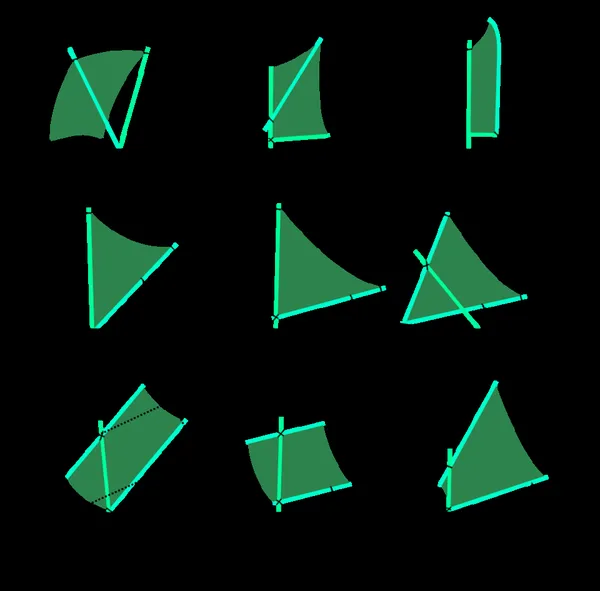
Austronesian vessels are the traditional seafaring vessels of the Austronesian peoples of Taiwan, Maritime Southeast Asia, Micronesia, coastal New Guinea, Island Melanesia, Polynesia, and Madagascar. They also include indigenous ethnic minorities in Vietnam, Cambodia, Myanmar, Thailand, Hainan, the Comoros, and the Torres Strait Islands. They range from small dugout canoes to large lashed-lug plank-built vessels. Their hull configurations include monohulls as well as catamarans and outrigger boats (single-outrigger boats and trimarans). Traditional sail types include a variety of distinctively Austronesian crab-claw and tanja configurations, though modern vessels are typically motorized. These vessels allowed the migrations of the Austronesian peoples during the Austronesian expansion (starting at around 3000 to 1500 BC from Taiwan and Island Southeast Asia) throughout the islands of the Indo-Pacific, reaching as far as Madagascar, New Zealand, and Easter Island. They were also used to establish trading routes, including the Austronesian maritime trade network which formed the maritime leg of the spice trade and later, the Maritime Silk Road.
Also on this shelf
Chitlapakkam Lake.
Estuaries of Paravur.
See also
Uncatalogued shelfText from Wikipedia; plate via Wikimedia Commons. Text CC BY-SA 4.0; plate freely licensed (see Commons). Source record. Images and catalogue data are reproduced from open-access collections.