Maritime History
French ship Vengeur du Peuple
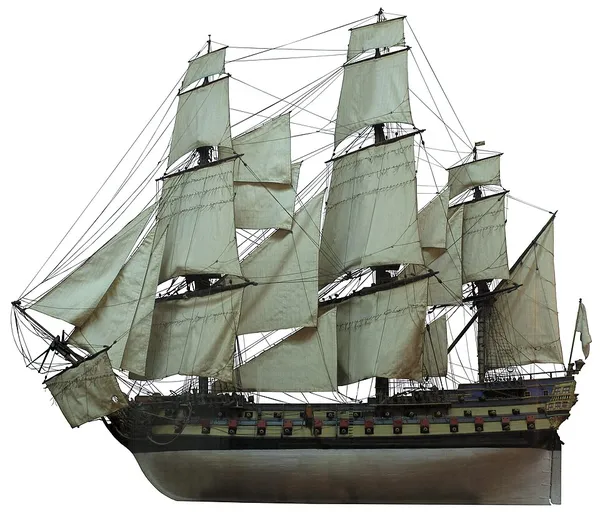
Vengeur du Peuple ("Avenger of the People") was a 74-gun ship of the line of the French Navy. Funded by a don des vaisseaux donation from the Chamber of Commerce of Marseille, she was launched in 1766 as the Marseillois. She took part in the naval operations in the American Revolutionary War in the French fleet under Admiral Charles Henri Hector, Count of Estaing, duelling HMS Preston in a single-ship action on 11 August 1778, taking part in the Battle of the Chesapeake where she duelled HMS Intrepid, and supporting the flagship Ville de Paris at the Battle of the Saintes. She also took part in the Battle of Saint Kitts. After the loss of the 74-gun French ship Vengeur (launched 1789) in June 1793, the 28-year-old Marsellois was renamed Vengeur du Peuple in February 1794 and under that name she took part in the Battle of the Glorious First of June. There, she was disabled after a furious duel with HMS Brunswick and surrendered after losing hope of being rescued by a French ship. After a few hours, as British ships were beginning rescue operations, she listed and foundered, taking almost half her crew with her. Thus she only bore the name Vengeur du Peuple for a few weeks compared with her 28 years of service as the Marsellois. The sinking of Vengeur du Peuple was used as propaganda by the National Convention and Bertrand Barère, who gave birth to the legend that the crew had gone down with the ship fighting, rather than surrender. The Scottish historian Thomas Carlyle repeated the tale in his The French Revolution: A History, yielding a rebuttal by Rear-Admiral John Griffiths, who had witnessed the events. Although discredited in naval history circles, the legend lived on as a folk tale, inspiring numerous representations and a fictional account by Jules Verne in his 1870 novel Twenty Thousand Leagues Under the Seas.
Also on this shelf
Italian ironclad Venezia.
1953 Coronation Honours.
See also
Uncatalogued shelfText from Wikipedia; plate via Wikimedia Commons. Text CC BY-SA 4.0; plate freely licensed (see Commons). Source record. Images and catalogue data are reproduced from open-access collections.