Maritime History
16th century
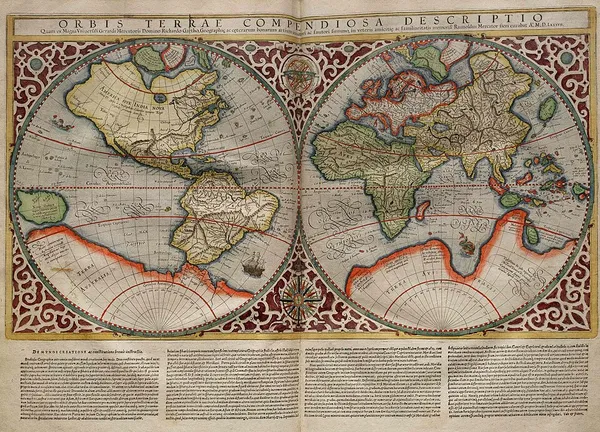
The 16th century begins with the Julian year 1501 (MDI) and ends with either the Julian or the Gregorian year 1600 (MDC) (depending on the reckoning used; the Gregorian calendar introduced a lapse of 10 days in October 1582). The Habsburg Spanish Empire, Portuguese Empire, Ottoman Empire, Safavid Persia, Mughal India and Ming China were the most powerful and hegemonic states. The Renaissance in Italy and Europe saw the emergence of important artists, authors and scientists, and led to the foundation of important subjects which include accounting and political science. Copernicus proposed the heliocentric universe, which was met with strong resistance, and Tycho Brahe refuted the theory of celestial spheres through observational measurement of the 1572 appearance of a Milky Way supernova. These events directly challenged the long-held notion of an immutable universe supported by Ptolemy and Aristotle, and led to major revolutions in astronomy and science. Galileo Galilei became a champion of the new sciences, invented the first thermometer and made substantial contributions in the fields of physics and astronomy, becoming a major figure in the Scientific Revolution in Europe. Spain and Portugal colonized large parts of Central and South America, followed by France and England in Northern America and the Lesser Antilles. The Portuguese became the masters of trade between Brazil, the coasts of Africa, and their possessions in the Indies, whereas the Spanish came to dominate the Greater Antilles, Mexico, Peru, and opened trade across the Pacific Ocean, linking the Americas with the Indies. English and French privateers began to practice persistent theft of Spanish and Portuguese treasures. This era of colonialism established mercantilism as the leading school of economic thought, where the economic system was viewed as a zero-sum game in which any gain by one party required a loss by another. The mercantilist doctrine encouraged the many intra-European wars of the period and arguably fueled European expansion and imperialism throughout the world until the 19th century or early 20th century. The Reformation in central and northern Europe gave a major blow to the authority of the papacy and the Catholic Church.
Also on this shelf
HMS Edgar (1668).
Kronan (ship).
See also
Uncatalogued shelfText from Wikipedia; plate via Wikimedia Commons. Text CC BY-SA 4.0; plate freely licensed (see Commons). Source record. Images and catalogue data are reproduced from open-access collections.