Maps and Exploration
Goiânia accident
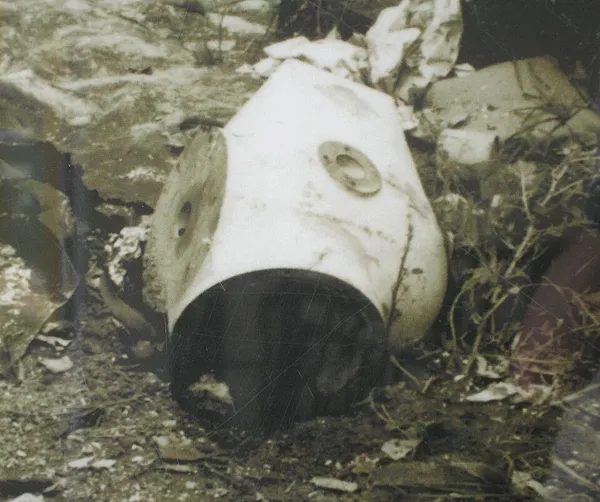
The Goiânia accident (Brazilian Portuguese: [ɡo(j)ˈjɐniɐ]), also known locally as the caesium-137 accident/caesium-137 Goiânia, was a radioactive contamination accident that occurred on September 13, 1987, in Goiânia, Goiás, Brazil, after an unsecured radiotherapy source, inside a lead-and-steel medical device, was found by scavenger thieves at an abandoned hospital site in the city. The thieves, and then workers at the scrapyard owned by Devair Ferreira, who bought the device from the thieves, used tools to open the device and expose the caesium-137 crystals (specifically a caesium chloride salt). Ferreira brought the exposed caesium-137 crystals to his home, sharing them with his family and neighbours; the caesium-137 crystals were subsequently handled by many people, resulting in four deaths – two of Ferreira's family members and two of his scrapyard employees. About 112,000 people were examined for radioactive contamination and 249 of them were found to have been contaminated. In the consequent cleanup operation, topsoil had to be removed from several sites, and several houses were demolished. All the objects from within those houses, including personal possessions, were seized and incinerated. Time magazine has identified the accident as one of the world's "worst nuclear disasters" and the International Atomic Energy Agency (IAEA) called it "one of the world's worst radiological incidents".
Also on this shelf
Jenny Island.
Capitol Theatre (Port Hope).
See also
Uncatalogued shelfText from Wikipedia; plate via Wikimedia Commons. Text CC BY-SA 4.0; plate freely licensed (see Commons). Source record. Images and catalogue data are reproduced from open-access collections.