Maps and Exploration
Equatorial Guinea
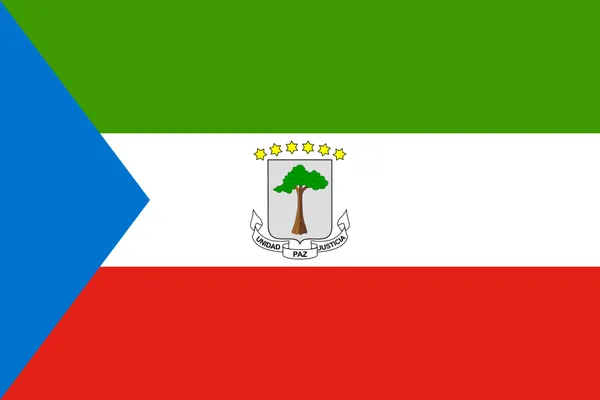
Equatorial Guinea, officially the Republic of Equatorial Guinea, is a country on the west coast of Central Africa and the only Spanish-speaking country in Africa. It has an area of 28,000 square kilometres (11,000 sq mi). Formerly the colony of Spanish Guinea, its post-independence name refers to its location both near the Equator and in the African region of Guinea. As of 2025, the country has a population of 1,853,559, over 85% of whom are members of the Fang people, the country's dominant ethnic group. The Bubi people, indigenous to Bioko Island, are the second largest group at approximately 6.5% of the population. The capital, since January 2026, is Ciudad de la Paz, and Bata is the largest city. Equatorial Guinea consists of two parts. The mainland region, Río Muni, is bordered by Cameroon to the north and Gabon to the south and east. It has the majority of the population. Río Muni's small offshore islands include Corisco, Elobey Grande, and Elobey Chico. The insular region consists of the islands of Bioko (formerly Fernando Po) in the Gulf of Guinea and Annobón. Bioko Island is the northernmost part of Equatorial Guinea and is the site of Malabo. The Portuguese-speaking island nation of São Tomé and Príncipe is located between Bioko and Annobón. The Equator runs through Equatorial Guinea's territorial waters, about 1.4° north of Annobón. Pygmies are the first confirmed inhabitants to settle in the area of present-day Equatorial Guinea, followed by a migration of Bantu-speaking groups in the 6th century BC. Portuguese explorer Fernando Pó explored the area in 1472. Via the 1778 Treaty of El Pardo, Portugal ceded territories in the Bight of Biafra to Spain; the territory was declared Spanish Guinea during the Scramble for Africa. Nearly 200 years later, it gained independence in 1968 under the bloody dictatorship of President Francisco Macías Nguema. He declared himself president for life in 1972 but was overthrown in a coup in 1979 by his nephew, Teodoro Obiang Nguema Mbasogo, who has served as the country's president since. Obiang's regime has also been widely characterised as a dictatorship by foreign observers. Since the mid-1990s, Equatorial Guinea has become one of Sub-Saharan Africa's largest oil producers.
Also on this shelf
Florida State Road 528.
Hong Kong–Zhuhai–Macau Bridge.
See also
Uncatalogued shelfText from Wikipedia; plate via Wikimedia Commons. Text CC BY-SA 4.0; plate freely licensed (see Commons). Source record. Images and catalogue data are reproduced from open-access collections.