Maps and Exploration
Caxias do Sul
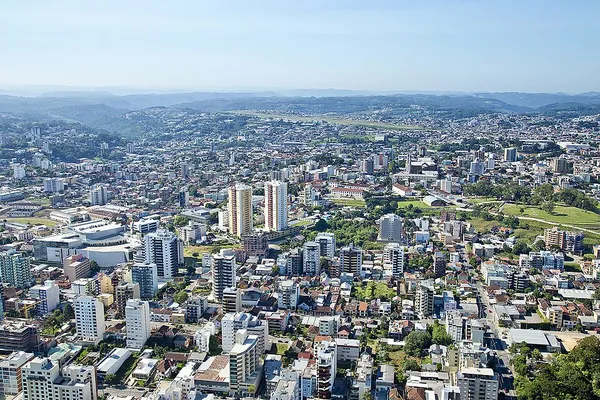
Caxias do Sul is a Brazilian municipality in the state of Rio Grande do Sul. Located in the northeast of the state at an elevation of 817 meters, it is the largest city in the Serra Gaúcha region, the second most populous city in Rio Grande do Sul, surpassed only by the state capital Porto Alegre, and the 47th largest city in Brazil. Throughout its history, Caxias do Sul has been known as Campo dos Bugres (until 1877), Colônia de Caxias (1877–1884), and Santa Teresa de Caxias (1884–1890). The city was established where the Vacaria Plateau begins to break into numerous valleys, intersected by small waterways, resulting in a rugged topography in its southern part. The area was inhabited by indigenous Kaingang people since time immemorial, but they were forcibly displaced by so-called "bugreiros" to make way, in the late 19th century, for the Empire of Brazil's decision to colonize the region with a European population. Consequently, thousands of immigrants, primarily Italians from the Veneto region, but also including some Germans, French, Spaniards, and Poles, crossed the sea and ascended the Serra Gaúcha, exploring an area that was still almost entirely uncharted. After an initial period filled with hardships and deprivation, the immigrants succeeded in establishing a prosperous city, with an economy initially based on the exploitation of agricultural products, particularly grapes and wine, whose success is reflected in the rapid expansion of commerce and industry in the first half of the 20th century. Concurrently, the rural and ethnic roots of the community began to lose relative importance in the economic and cultural landscape as urbanization progressed, an educated urban elite emerged, and the city became more integrated with the rest of Brazil. During the first government of Getúlio Vargas, a significant crisis arose between the immigrants and their early descendants and the Brazilian milieu, as nationalism was emphasized, and cultural and political expressions of foreign ethnic origin were severely repressed.
Also on this shelf
Aristoteles (crater).
Government Bond Store, Maryborough.
See also
Uncatalogued shelfText from Wikipedia; plate via Wikimedia Commons. Text CC BY-SA 4.0; plate freely licensed (see Commons). Source record. Images and catalogue data are reproduced from open-access collections.