Maps and Exploration
Controversies surrounding Robert Falcon Scott
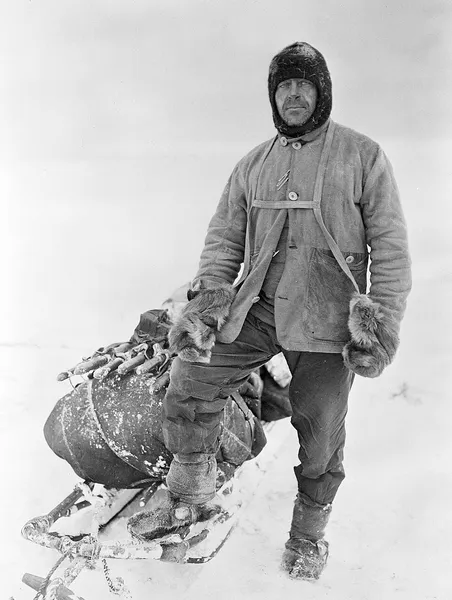
The British Antarctic explorer Robert Falcon Scott became the subject of controversy when, more than 60 years after his death on the return march from the South Pole in 1912, his character came under sustained attack. Up to then Scott's image, in Britain and much of the world, had been that of heroic endeavour, the cornerstone of his reputation was his "Message to the Public" written just before his death. However, Roland Huntford's 1979 joint biography of Scott and his rival Roald Amundsen presented a contrasting view of Scott, not as hero but as bungler. The book was reissued in the 1980s as The Last Place on Earth, and was the subject of a 1985 television serial The Last Place on Earth. Although Huntford's objectivity was questioned, the book and related television drama changed the public's perception, with the "bungler" tag quickly becoming the new orthodoxy. In the 1980s and 1990s Scott was depicted negatively in several books. As Scott's reputation declined, that of his contemporary Ernest Shackleton, long overshadowed by Scott, was in the ascendent. Shackleton's man-management skills were celebrated, particularly in the United States, as models for business leaders. The first decade of the 21st century saw specific attempts to rescue Scott's reputation. Analysis of March 1912 meteorological data has been used to suggest Scott and his party might have been primarily the victims of unusually severe Antarctic weather, rather than incompetence. A 2003 Scott biography by polar explorer Sir Ranulph Fiennes included a defence of Scott, and was the first book to mount a serious attack on Huntford's thesis and credentials. Other biographical and historical works, television programmes and articles have continued to appear, representing different areas of the controversy's spectrum. In 2012, Karen May at the Scott Polar Research Institute re-discovered the fact that Scott had left written orders at Cape Evans to secure Scott's speedy return from the pole using dogs. This order was ultimately not carried out.
Also on this shelf
Bijapur district, Karnataka.
Area codes 416, 647, 437, and 942.
See also
Uncatalogued shelfText from Wikipedia; plate via Wikimedia Commons. Text CC BY-SA 4.0; plate freely licensed (see Commons). Source record. Images and catalogue data are reproduced from open-access collections.