Maps and Exploration
Assisted migration of forests in North America
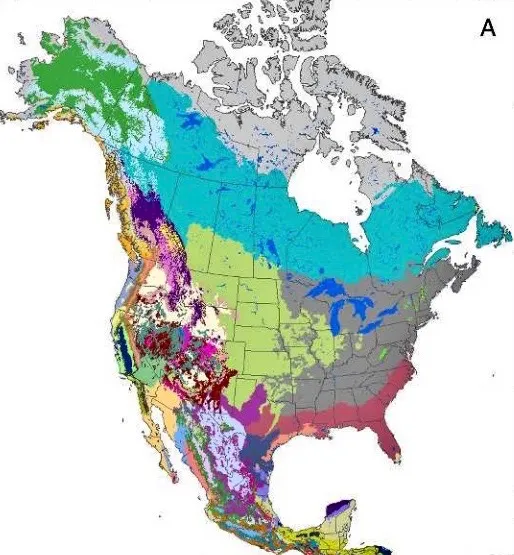
Assisted migration is the movement of populations or species by humans from one territory to another in response to climate change. This is the definition offered in a nontechnical document published by the United States Forest Service in 2023, suggesting that this form of climate adaptation "could be a proactive, pragmatic tool for building climate resilience in our landscapes." Programs for assisted migration of forests in North America have been created by public and indigenous governmental bodies, private forest owners, and land trusts. They have been researching, testing, evaluating, and sometimes implementing forest assisted migration projects as a form of adaptation to climate change. Assisted migration in the forestry context differs from assisted migration as originally proposed in the context of conservation biology, where it is regarded as a management tool for helping endangered species cope with the need for climate adaptation. The focus in forestry is mitigating climate change's negative effects on the health and productivity of working forests. Forestry assisted migration is already underway in North America because of the rapidly changing climate and the forestry industry's reseeding practices. It is now standard practice for governmental and industrial harvests of trees to be followed by the planting of seeds or seedlings in the harvested areas. Hence, an opportunity automatically arises post-harvest to select seeds (and sometimes different species of trees) from areas with climates that are expected to arrive in the harvested sites decades into the future. The government of British Columbia in Canada was the first federated state on the continent to make the decision to change their seed transfer guidelines accordingly in 2009. Longer distance forms of assisted migration were not, however, considered prior to climate modelling and within-forest evidence of the increasing pace of climate change. Serious discussion and debate ensued in the forestry profession beginning around 2008. The debate focuses around the ethical implications of artificially migrating ecosystems, the risks and benefits of such endeavors, and the values at the heart of assisted forest migration projects. There are also recorded instances of inadvertent assisted migration of North American trees.
Also on this shelf
Arktika 2007.
Gina Moseley.
See also
Uncatalogued shelfText from Wikipedia; plate via Wikimedia Commons. Text CC BY-SA 4.0; plate freely licensed (see Commons). Source record. Images and catalogue data are reproduced from open-access collections.