Maps and Exploration
Economy of Sri Lanka
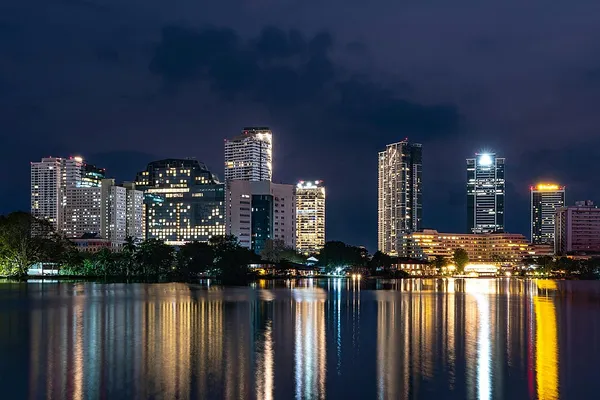
Sri Lanka has a developing mixed economy. It was valued at LKR 32.7 trillion (around US$109 billion) in 2025 by gross domestic product (GDP) and $371.27 billion by purchasing power parity (PPP) Sri Lanka's economy has experienced a strong recovery in recent years, driven by rising domestic consumption, increased investment, and improved performance in the industry and services sectors. GDP growth remained strong, recording 5.0% in both 2024 and 2025, with both years performing above earlier expectations. This recovery follows a period of severe economic difficulties between 2018 and 2022, including the COVID-19 pandemic, foreign exchange shortages, and the 2022 economic crisis. Sri Lanka has met the Millennium Development Goal (MDG) target of halving extreme poverty and is on track to meet most of the other MDGs, outperforming other South Asian countries. Sri Lanka's poverty headcount index was 4.1% by 2016. Since the end of the three-decade-long Sri Lankan Civil War, Sri Lanka has begun focusing on long-term strategic and structural development challenges and has financed several infrastructure projects. The nation experienced a sovereign debt default in 2022 amid unsustainable external obligations and severe macroeconomic imbalances, rebounding in 2024 with support from the IMF.
Also on this shelf
Babri Masjid.
Emydidae.
See also
Uncatalogued shelfText from Wikipedia; plate via Wikimedia Commons. Text CC BY-SA 4.0; plate freely licensed (see Commons). Source record. Images and catalogue data are reproduced from open-access collections.