Maps and Exploration
HMS Challenger (1858)
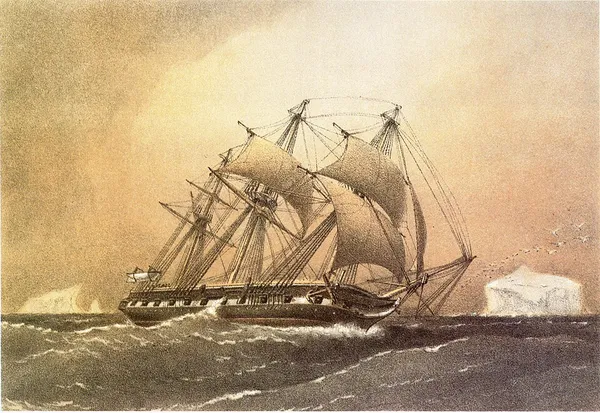
HMS Challenger was a Pearl-class corvette of the Royal Navy, launched on 13 February 1858 at Woolwich Dockyard. She carried the first global marine survey, organised by the Royal Society in the 1870s. As part of the North America and West Indies Station, she took part in naval operations during the Second French intervention in Mexico, including the occupation of Veracruz, in 1862. She was assigned as the flagship of Australia Station in 1866, undertaking a punitive expedition in Fiji before leaving the station four years later. The Royal Society of London obtained the use of Challenger from the Royal Navy in 1872 and modified the ship to undertake the first global marine research expedition: the Challenger expedition (1872–1876). She carried a complement of 243, comprising officers (including commander George Nares), scientists (with Charles Wyville Thomson the chief scientific supervisor) and sailors, when she embarked on the 68,890-nautical-mile (127,580 km) journey. The United States Space Shuttle Challenger was named after the ship. Her figurehead is on display in the foyer of the National Oceanography Centre, Southampton.
Also on this shelf
Cornelia Lüdecke.
Crescent Theater.
See also
Uncatalogued shelfText from Wikipedia; plate via Wikimedia Commons. Text CC BY-SA 4.0; plate freely licensed (see Commons). Source record. Images and catalogue data are reproduced from open-access collections.