Maps and Exploration
Arab–Byzantine wars
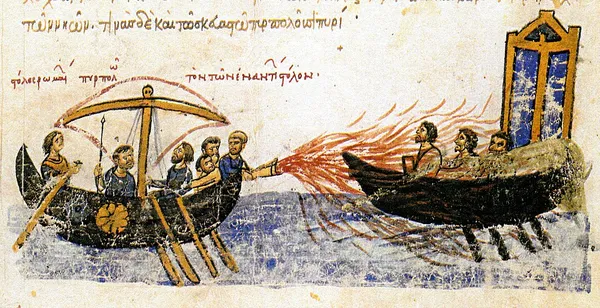
The Arab–Byzantine wars or Muslim–Byzantine wars were a series of wars from the 7th to 11th centuries between the successive Islamic caliphates and the Byzantine Empire. Following the Byzantine defeat at the Battle of the Yarmuk, Muslim armies conquered most Byzantine territory in the Levant, Egypt and North Africa within decades. Arab expansion subsequently slowed to a more gradual rate, following two failed sieges of the Byzantine capital of Constantinople in the late 7th and early 8th centuries. By the mid-9th century, the Byzantines had partially recovered and proceeded to recapture some of their lost territory in Anatolia in the following decades. The conflict began during early Muslim conquests under the expansionist Rashidun Caliphate, part of the initial spread of Islam. In the 630s, Rashidun forces from Arabia attacked and quickly overran Byzantium's Levantine and African provinces. Syria was captured in 639 and Egypt was conquered in 642. The Exarchate of Africa was gradually seized between 647 and 670. From the 650s onward, Arab naval forces began entering the Mediterranean Sea, which subsequently became a major battleground, with both sides launching raids and counterraids against islands and coastal settlements. The Rashidun were succeeded by the Umayyad Caliphate in 661, who over the next fifty years captured Byzantine Cyrenaica and launched repeated raids into Byzantine Asia Minor. Umayyad forces twice placed Constantinople under siege, in 674 to 678 and 717 to 718, but ultimately failed to seize the heavily fortified Byzantine imperial capital. Following the failed second siege, the border stabilized at the Taurus Mountains in Asia Minor. The Umayyads, and later the Byzantines, launched frequent attacks across this frontier, which was heavily fortified by both sides. As a result, the surrounding region became depopulated due to constant warfare. During the initial period of conflict in the 7th and early 8th centuries, the Byzantines were usually on the defensive, avoiding open battles and preferring to retreat to fortified strongholds. After the mid-8th century Byzantine forces began to launch their own counter-offensives across the frontier at the Taurus Mountains, and further abroad by sea. In 750 the Umayyads were overthrown by the Abbasid Caliphate, who were less expansionist than their predecessors.
Also on this shelf
Dallmann Laboratory.
Acropolis Museum.
See also
Uncatalogued shelfText from Wikipedia; plate via Wikimedia Commons. Text CC BY-SA 4.0; plate freely licensed (see Commons). Source record. Images and catalogue data are reproduced from open-access collections.