Maps and Exploration
Economy of Japan
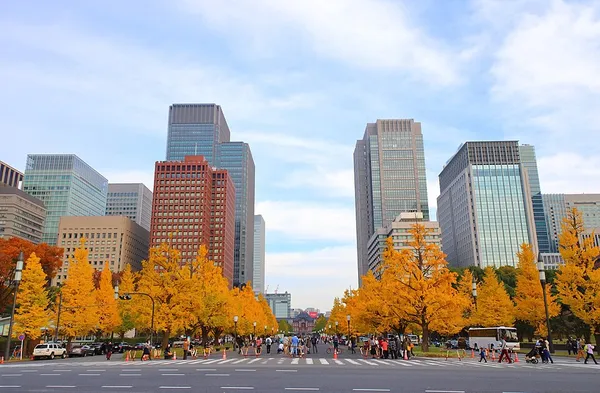
Japan has a highly developed mixed economy. It is known as an East Asian model for its public investment into strategic sectors. Japan is the fourth-largest economy in the world by nominal GDP and the fifth-largest by purchasing power parity (PPP). It constituted 3.7% of the world's economy on a nominal basis in 2024. A founding member of the G7 and an early member of the OECD, Japan was the first country in Asia to achieve developed country status. In 2024, Japan was the sixth-largest in the world as an importer and eight-largest as an exporter. The country also has the world's fourth-largest consumer market, and consumption accounts for around 53% of GDP. Long having been an agricultural country, it has been estimated that Japan’s economy was among the top ten in the world by size before the industrial revolution started. Industrialisation in Japan began in the 19th century with the Meiji Restoration, initially focusing on the textile industry and later on heavy industries. The country rapidly built its colonial empire. After the defeat in the Second World War, Japan’s economy recovered, primarily propelled by its lucrative manufacturing exporting industries. Japan was the second largest economy in the world from the 1980s to 2010, and on a nominal per capita basis, the most high-income among the G7 countries in the 1980s and 1990s. Since the collapse of the Japanese asset price bubble in the early 1990s, the country has experienced a prolonged period of economic stagnation referred to as the Lost Decades. The country has the world's second-largest foreign-exchange reserves, worth $1.4 trillion. Japan has the third-largest financial assets in the world, valued at $12 trillion, or 8.6% of the global GDP total as of 2020. Japan has a highly efficient social security system, which comprises roughly 23.5% of GDP. The Tokyo Stock Exchange is the world's fourth-largest stock exchange by market capitalisation as of 2025. Japan has a highly service-dominated economy, making up 70% of GDP. The country's automobile industry is the third largest in the world. In 2022, Japan spent around 3.7% of GDP on research and development. As of 2025, 38 of the Fortune Global 500 companies are based in Japan.
Also on this shelf
Dunbar Apartments.
Actin.
See also
Uncatalogued shelfText from Wikipedia; plate via Wikimedia Commons. Text CC BY-SA 4.0; plate freely licensed (see Commons). Source record. Images and catalogue data are reproduced from open-access collections.