Maps and Exploration
Economy of India
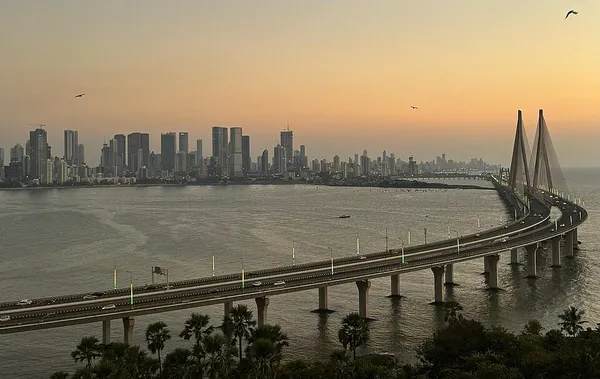
India has a developing market-oriented economy with substantial state participation in strategic sectors. It is the world's sixth-largest economy by nominal GDP and the third-largest by purchasing power parity (PPP) as of April 2026. On a per capita income basis, the nation is ranked 149th by nominal GDP and 119th by PPP-adjusted GDP as of 2026. From independence in 1947 until 1991, economic development was characterized by protectionist economic policies, with extensive state intervention, demand-side economics, natural resource optimization, and regulation. An acute balance of payments crisis in 1991 led to the adoption of broad economic liberalisation in India and indicative planning. Nearly 70% of India's GDP is driven by domestic consumption, with the nation consistently the world's third-largest consumer market. As of 2025, the service sector accounts for around 55% of GDP. Aside from private consumption, India's GDP is fueled by government spending, investments, and exports. As of 2025, India is the world's 7th-largest importer and the 10th-largest exporter. India is often described as the "pharmacy of the world", supplying around one-fifth of global demand for pharmaceuticals to over 200 countries. India is the largest vaccine manufacturer globally by volume, accounting for over 60% of the world's production. India is the world's fifth-largest manufacturer, representing 3.2% of global manufacturing output. India's digital economy was estimated to be 11.7% of GDP, with its total value expected to surpass US$1 trillion by 2029. Nearly 63% of India's population lives in rural areas, and generates about 46% of Indian GDP. India has been a member of the World Trade Organization (WTO) since 1995. It ranks 41st on the Global Competitiveness Index and 39th in the Global Innovation Index. As of 2025, India ranks third in the world in total number of billionaires. India's Gini coefficient fell to 25.5 by 2023, making it the fourth-most equal country globally, suggesting significant progress in income equality. Economists and social scientists often consider India a welfare state. India's overall social welfare spending stood at 8.6% of GDP in 2022. It has two of the world's ten largest stock exchanges. India has free-trade agreements with many world nations, including the European Union, and is a member of numerous economic organisations.
Also on this shelf
Andrew Keith Jack.
Battle of Heartbreak Ridge.
See also
Uncatalogued shelfText from Wikipedia; plate via Wikimedia Commons. Text CC BY-SA 4.0; plate freely licensed (see Commons). Source record. Images and catalogue data are reproduced from open-access collections.