Maps and Exploration
Burundi
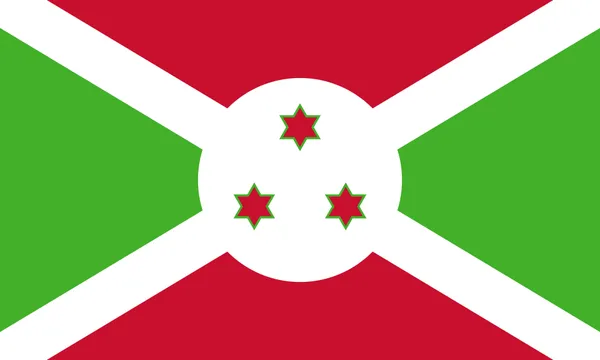
Burundi, officially the Republic of Burundi, is a landlocked country in East Africa. It is located in the Great Rift Valley at the junction between the African Great Lakes region and southeastern Africa, with a population of over 14 million people. It is bordered by Rwanda to the north, Tanzania to the east and southeast, and the Democratic Republic of the Congo to the west; Lake Tanganyika lies along its southwestern border. The political capital city is Gitega and the economic capital and largest city is Bujumbura. The Twa, Hutu, and Tutsi peoples have lived in Burundi for at least 500 years. For more than 200 of those years, Burundi was an independent kingdom. In 1885, it became part of German East Africa. After the First World War and Germany's defeat, the League of Nations mandated the territories of Burundi and Rwanda to Belgium in a combined territory called Ruanda-Urundi. After the Second World War, this transformed into a United Nations trust territory. Burundi gained independence in 1962 and initially retained the monarchy. However, a coup d'état in 1966 replaced the monarchy with a one-party republic, and for the next 27 years, Burundi was ruled by a series of ethnic Tutsi dictators and notably experienced a genocide of its Hutu population in 1972. In 1993, Melchior Ndadaye became Burundi's first Hutu president following the country's first multi-party presidential election. His assassination three months later during a coup attempt provoked the 12-year Burundian Civil War. In 2000, the Arusha Agreement was adopted, which was largely integrated in a new constitution in 2005. Since the 2005 post-war elections, the dominant party has been the Hutu-led National Council for the Defense of Democracy – Forces for the Defense of Democracy (CNDD–FDD), widely accused of authoritarian governance and perpetuating the country's poor human rights record. Burundi remains primarily a rural society, with just 13.4% of the population living in urban areas in 2019. Burundi is densely populated, and many young people emigrate in search of opportunities elsewhere. Roughly 81% of the population are of Hutu origin, 18% are Tutsi, and fewer than 1% are Twa. The official languages are Kirundi, French, and English—Kirundi being officially recognised as the sole national language.
Also on this shelf
Benishangul-Gumuz Region.
Arizona State Route 202.
See also
- ▸History of Portugal (1415–1578)
- ▸Debate over the atomic bombings of Hiroshima and Nagasaki
- ▸Bartlett–Russell–Hedge House
Text from Wikipedia; plate via Wikimedia Commons. Text CC BY-SA 4.0; plate freely licensed (see Commons). Source record. Images and catalogue data are reproduced from open-access collections.