Maps and Exploration
Age of Discovery
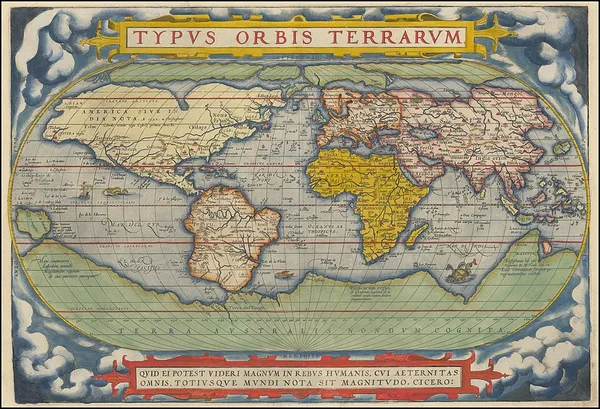
The Age of Discovery (c. 1450 – c. 1620), also known as the Age of Exploration, was part of the early modern period and overlapped with the Age of Sail. It was a period from approximately the 15th to the 17th century, during which seafarers from European countries explored, colonized, and conquered regions across the globe. The Age of Discovery was a transformative period when previously isolated parts of the world became connected to form the world-system, and laid the groundwork for globalization. The extensive overseas exploration, particularly the European colonization of the Americas by the Spaniards and Portuguese, later joined by the English, French, and Dutch, spurred international global trade. The interconnected global economy of the 21st century has its origins in the expansion of trade networks during this era. The exploration created European colonial empires and marked an increased adoption of colonialism as a government policy in several European states. As such, it is sometimes synonymous with the first wave of European colonization. This colonization reshaped power dynamics causing geopolitical shifts in Europe and creating new centers of power beyond Europe. Portuguese oceanic exploration began with maritime expeditions to the Macaronesian islands, including the Canary Islands, as well as Madeira and the Azores. It continued with voyages along the coast of West Africa in 1434, and culminated in the establishment of a sea route to India in 1498 by Vasco da Gama, which initiated Portugal's maritime and commercial presence in Kerala and the Indian Ocean. Spain made the transatlantic voyages of Christopher Columbus (1492–1504), which marked the beginning of colonization in the Americas, the Magellan expedition (1519–1522), which opened a route from the Atlantic to the Pacific and, under Juan Sebastián Elcano, completed the first circumnavigation of the globe. Spain also undertook other major early voyages, including the conquest of Mexico (1519–1521), the conquest of Peru (1532–1533), and the Manila galleon trade route (1565–1815), which linked the Americas and Asia across the Pacific.
Also on this shelf
California State Senate.
Aegean dispute.
See also
Uncatalogued shelfText from Wikipedia; plate via Wikimedia Commons. Text CC BY-SA 4.0; plate freely licensed (see Commons). Source record. Images and catalogue data are reproduced from open-access collections.