Maps and Exploration
Climate change in Africa
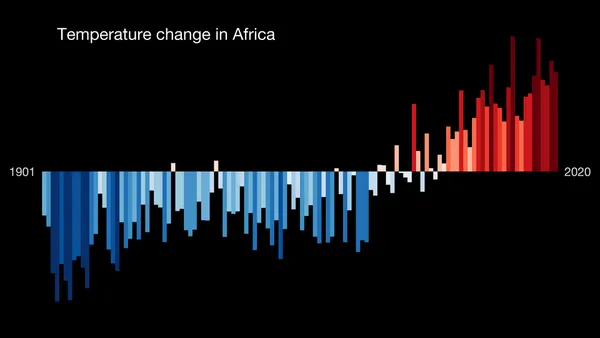
Climate change in Africa is a serious threat because the continent is one of the most vulnerable regions to the effects of climate change, despite being responsible for less than 4% of global greenhouse emissions. Climate change is causing increasingly erratic rainfall patterns, more frequent extreme weather events such as droughts, floods, and rising sea-surface temperatures across the continent. These changes threaten food and water security, biodiversity, public health, and economic development. Africa is currently warming faster than the rest of the world on average. Climate change intensifies existing socioeconomic vulnerabilities. Large segments of the African population depend on climate-sensitive livelihoods such as agriculture (55 - 62% of the workforce in sub-Saharan Africa) and already live in poverty, heightening their exposure to shocks. Health outcomes worsen as heat stress, vector-borne diseases (such as malaria and dengue), and malnutrition become more prevalent. Over half (56%) of the over 2,000 recorded public health incidents in Africa between 2001 and 2021 were connected to climate change. Resource scarcity contributes to displacement and conflict, particularly in fragile regions. Urban areas, often characterized by informal settlements, face heightened risks from flooding and extreme heat. Agriculture is one of the most vulnerable sectors, as most African farmers rely on rainfed crops. Reduced and unpredictable rainfall, combined with higher temperatures, drives soil moisture loss, desertification (especially in the Sahara) and shifts suitable growing areas. These changes lower yields of staple crops, undermining food security and worsening hunger. Livestock health is increasingly compromised by heat stress and shifting disease patterns. Coastal and marine ecosystems face warming seas and rising levels, which threaten fisheries and densely populated coastal settlements. The economic toll of climate change is severe. On average African countries face climate-related losses amounting to 2-5% of GDP annually, while adaptation costs in sub-Sahran Africa are projected at USD 30-50 billion per year over the next decade.
Also on this shelf
Giszowiec.
Bern railway station.
See also
Uncatalogued shelfText from Wikipedia; plate via Wikimedia Commons. Text CC BY-SA 4.0; plate freely licensed (see Commons). Source record. Images and catalogue data are reproduced from open-access collections.