Maps and Exploration
Haida Gwaii
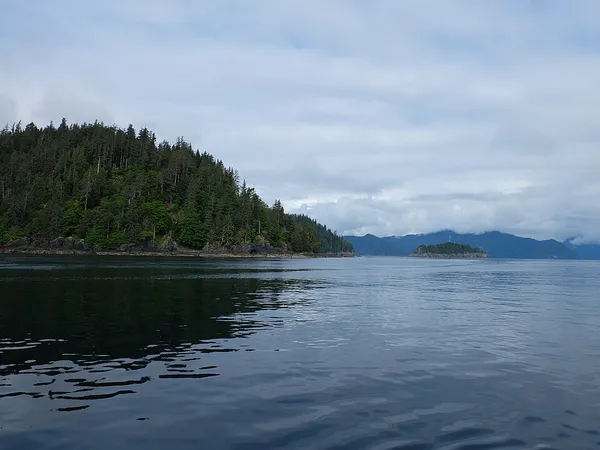
Haida Gwaii (; Haida: X̱aaydag̱a Gwaay.yaay / X̱aayda gwaay, literally "Islands of the Haida people"), previously known as the Queen Charlotte Islands, is an archipelago located between 55–125 km (34–78 mi) off the northern Pacific coast in the Canadian province of British Columbia. The islands are separated from the mainland to the east by the shallow Hecate Strait. Queen Charlotte Sound lies to the south, with Vancouver Island beyond. To the north, the disputed Dixon Entrance separates Haida Gwaii from the Alexander Archipelago in the U.S. state of Alaska. Haida Gwaii consists of two main islands: Graham Island (Kiis Gwaay) in the north and Moresby Island (Haida: T'aawxii X̱aaydag̱a Gwaay.yaay linag̱waay, lit. 'south people island half', or Gwaay Haanas "Islands of Beauty") in the south, along with approximately 400 smaller islands with a total landmass of 10,180 km2 (3,931 sq mi). Other major islands include Anthony Island (Sg̱ang Gwaay), Burnaby Island (Sg̱aay Kun Gwaay.yaay), Langara Island (Kiis Gwaay), Lyell Island (Athlii Gwaii), Louise Island, (Ḵ'uuna Gwaay), Alder Island and Kunghit Island (G̱angx̱id Gwaay). On June 3, 2010, the Haida Gwaii Reconciliation Act formally renamed the archipelago to Haida Gwaii as part of the Kunst'aa guu – Kunst'aayah Reconciliation Protocol between British Columbia and the Haida people. The previous official name was given to the archipelago by British explorer George Dixon in 1787 after Queen Charlotte of Mecklenburg-Strelitz and the islands are known colloquially as "the Charlottes". The islands, upon which people have lived for 13,000 years, form the heartland of the Haida Nation. Members of the Haida Nation currently make up approximately half of the islands' population. The Council of the Haida Nation (CHN, X̱aaydag̱a Waadlux̱an Naay) was established in 1974 to "strive for full independence, sovereignty and self-sufficiency of the Haida Nation". As recently as 2015, the Haida Nation hosted First Nations delegations such as the potlatch and subsequent treaty signing between the Haida and Heiltsuk Nation. A small number of Kaigani Haida also live on the traditionally Tlingit Prince of Wales Island in Alaska.
Also on this shelf
Bathymetric chart.
David Humphreys House.
See also
Uncatalogued shelfText from Wikipedia; plate via Wikimedia Commons. Text CC BY-SA 4.0; plate freely licensed (see Commons). Source record. Images and catalogue data are reproduced from open-access collections.