Maps and Exploration
Conquistador
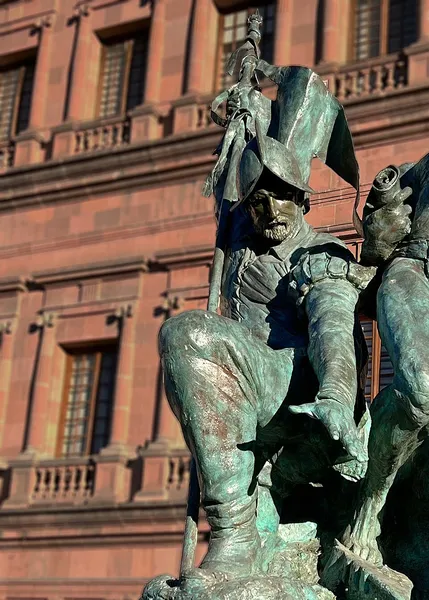
Conquistadors (, also , UK also ) or conquistadores (Spanish: [koŋkistaˈðoɾes]; Portuguese: [kõkiʃtɐˈðoɾɨʃ, kõkistɐˈdoɾis]; lit. 'conquerors') were Spanish and Portuguese colonists who explored, traded with, and conquered many parts of the Americas, Africa, Asia, and Oceania during the Age of Discovery. Sailing beyond the Iberian Peninsula, they established numerous colonies and trade routes, and brought much of the New World under the dominion of Spain and Portugal. After Christopher Columbus's arrival in the West Indies in 1492, the Spaniards, usually led by hidalgos from the west and south of Spain, began building a colonial empire in the Caribbean using colonies such as Santo Domingo, Cuba, and Puerto Rico as their main bases. From 1519 to 1521, Hernán Cortés led the Spanish conquest of the Aztec Empire, ruled by Moctezuma II. From the territories of the Aztec Empire, conquistadors expanded Spanish rule to northern Central America and parts of what is now the southern and western United States, and from Mexico sailing the Pacific Ocean to the Spanish East Indies. Other Spanish conquistadors took over the Inca Empire after crossing the Isthmus of Panama and sailing the Pacific to northern Peru. Beginning in 1532, Francisco Pizarro led the successful conquest of the lands under Inca control in a manner similar to Cortés. Subsequently, Spanish conquistadors used Peru as a base for conquering much of Ecuador and Chile. Central Colombia, home of the Muisca, was conquered by licentiate Gonzalo Jiménez de Quesada, and its northern regions were explored by Rodrigo de Bastidas, Alonso de Ojeda, Juan de la Cosa, Pedro de Heredia, and others. For southwestern Colombia, Bolivia, and Argentina, Spanish conquistadors from Peru combined parties with other conquistadors arriving more directly from the Caribbean and Río de la Plata-Paraguay respectively. These conquests founded the basis for modern Hispanic America and the Hispanosphere. Conquistadors in the service of the Portuguese Crown led numerous conquests and visits in the name of the Portuguese Empire across South America and Africa, going "anticlockwise" along the continent's coast right up to the Red Sea, as well as commercial colonies in Asia, founding the origins of modern Portuguese-speaking world.
Also on this shelf
Brabant Island.
1760s.
See also
Uncatalogued shelfText from Wikipedia; plate via Wikimedia Commons. Text CC BY-SA 4.0; plate freely licensed (see Commons). Source record. Images and catalogue data are reproduced from open-access collections.