Maps and Exploration
Alzheimer's disease
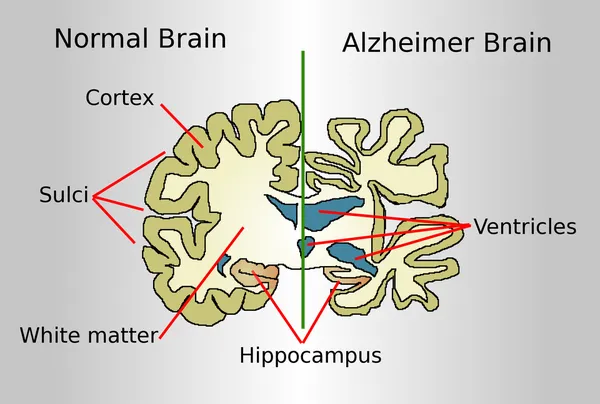
Alzheimer's disease (AD) is a neurodegenerative disease and is the most common cause of dementia, accounting for around 60–70% of cases. The most common early symptom is difficulty in remembering recent events. As the disease advances, symptoms can include problems with language, disorientation (including easily getting lost), mood swings, loss of motivation, self-neglect, and behavioral issues. As a person's condition declines, they often withdraw from family and society. Gradually, bodily functions are lost, ultimately leading to death. The median life expectancy following diagnosis of dementia is three to twelve years. Co-occurring movement disorder, also known as extrapyramidal signs, multiplies risk of death by 1.6. The causes of Alzheimer's disease remain poorly understood. There are many environmental and genetic risk factors associated with its development. The strongest genetic risk factor is from an allele of apolipoprotein E, a protein involved in the metabolism of fats in mammals. Other risk factors include a history of head injury, clinical depression, and high blood pressure. The progression of the disease is largely characterised by the accumulation of malformed protein deposits in the cerebral cortex, called amyloid plaques and neurofibrillary tangles. These misfolded protein aggregates interfere with normal cell function, and over time lead to irreversible degeneration of neurons and loss of synaptic connections in the brain. A probable diagnosis is based on the history of the illness and cognitive testing, with medical imaging and blood tests to rule out other possible causes. Initial symptoms are often mistaken for normal brain aging. Examination of brain tissue is the only way to definitively diagnose Alzheimer's, but neuroimaging techniques and fluid biomarkers have made it possible to diagnose probable Alzheimer's disease in vivo. No known treatments can stop or reverse its progression, though some may temporarily improve symptoms. A healthy diet, physical activity, and social engagement are generally beneficial in aging, and may help in reducing the risk of cognitive decline and Alzheimer's. Affected people become increasingly reliant on others for assistance, often placing a burden on caregivers. The pressures can include social, psychological, physical, and economic elements.
Also on this shelf
Eta Carinae.
Great Northern Expedition.
See also
Uncatalogued shelfText from Wikipedia; plate via Wikimedia Commons. Text CC BY-SA 4.0; plate freely licensed (see Commons). Source record. Images and catalogue data are reproduced from open-access collections.