Maps and Exploration
Economy of Peru
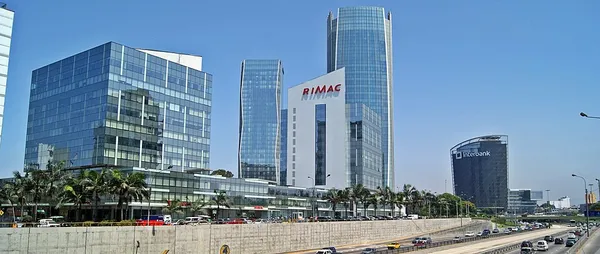
Peru has an emerging, mixed economy characterized by a high level of foreign trade and an upper middle income economy as classified by the World Bank. It has the forty-seventh largest economy in the world by total GDP and currently experiences a high human development index. The country was one of the world's fastest-growing economies in 2012, with a GDP growth rate of 6.3%. The economy was expected to increase 9.3% in 2021, in a rebound from the COVID-19 pandemic in Peru. Peru has signed a number of free trade agreements with its main trade partners. China became the nation's largest trading partner following the China–Peru Free Trade Agreement signed on 28 April 2009. Additional free trade agreements have been signed with the United States in 2006, Japan in 2011 and the European Union in 2012. Trade and industry are centralized in Lima while agricultural exports have led to regional development within the nation. Peru's economy is dependent on commodity exports, making it vulnerable to price volatility in international markets. The Government of Peru has historically shown limited involvement in the public sector, as the economy has often relied on commodity booms. The extraction of these commodities has led to conflicts within the country due to their environmental and social impacts. Following the independence of Peru from the Spanish Empire, the economic elite focused their power on the coastal regions through centralismo, while the rural provinces were governed by existing serfdom practices by hacienda landowners. This model essentially continued until 1968 when General Juan Velasco Alvarado took power, leading a dictatorship that increased social spending and removing the power of landowners, which resulted with a power vacuum in the 1970s that saw the rise of communist guerilla group Shining Path. Beginning in the 1980s, Peru faced economic difficulties as a result of the early 1980s recession and the internal conflict in Peru during its Lost Decade. The government of Alan García enacted price controls that resulted in hyperinflation. In response, the armed forces of Peru drafted Plan Verde, an operation to create a neoliberal, open market economy. This was reportedly executed by the government of Alberto Fujimori, beside prescriptions from economist Hernando de Soto, during a period known as "Fujishock".
Also on this shelf
Gartz.
Archiepiscopal Towers Interpretation Centre.
See also
Uncatalogued shelfText from Wikipedia; plate via Wikimedia Commons. Text CC BY-SA 4.0; plate freely licensed (see Commons). Source record. Images and catalogue data are reproduced from open-access collections.