Maps and Exploration
Coast
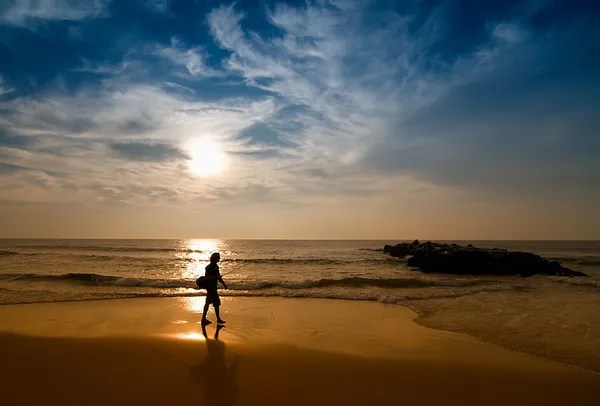
A coast (also called the coastline, shoreline, or seashore) is the land next to the sea or the line that forms the boundary between the land and the ocean or a lake. Coasts are influenced by the topography of the surrounding landscape and by aquatic erosion, such as that caused by waves. The geological composition of rock and soil dictates the type of shore that is created. Earth has about 620,000.0 km (385,250.1 mi) of coastline. Coasts are important zones in natural ecosystems, often home to a wide range of biodiversity. On land, they harbor ecosystems, such as freshwater or estuarine wetlands, that are important for birds and other terrestrial animals. In wave-protected areas, coasts harbor salt marshes, mangroves, and seagrasses, all of which can provide nursery habitat for finfish, shellfish, and other aquatic animals. Rocky shores are usually found along exposed coasts and provide habitat for a wide range of sessile animals (e.g. mussels, starfish, barnacles) and various kinds of seaweeds. In physical oceanography, a shore is the wider fringe that is geologically modified by the action of the body of water past and present, and the beach is at the edge of the shore, including the intertidal zone where there is one. Along tropical coasts with clear, nutrient-poor water, coral reefs can often be found at depths of 1–50 m (3.3–164.0 ft). According to an atlas prepared by the United Nations, about 44% of the human population lives within 150 km (93 mi) of the sea as of 2013. Due to its importance in society and its high population concentrations, the coast is important for major parts of the global food and economic system, and they provide many ecosystem services to humankind. For example, important human activities happen in port cities. Coastal fisheries (commercial, recreational, and subsistence) and aquaculture are major economic activities and create jobs, livelihoods, and protein for the majority of coastal human populations. Other coastal spaces like beaches and seaside resorts generate large revenues through tourism. Marine coastal ecosystems can also provide protection against sea level rise and tsunamis. In many countries, mangroves are the primary source of wood for fuel (e.g. charcoal) and building material.
Also on this shelf
Arctic Circle.
Brattle Theatre.
See also
Uncatalogued shelfText from Wikipedia; plate via Wikimedia Commons. Text CC BY-SA 4.0; plate freely licensed (see Commons). Source record. Images and catalogue data are reproduced from open-access collections.