Maps and Exploration
1601 East India Company Voyage
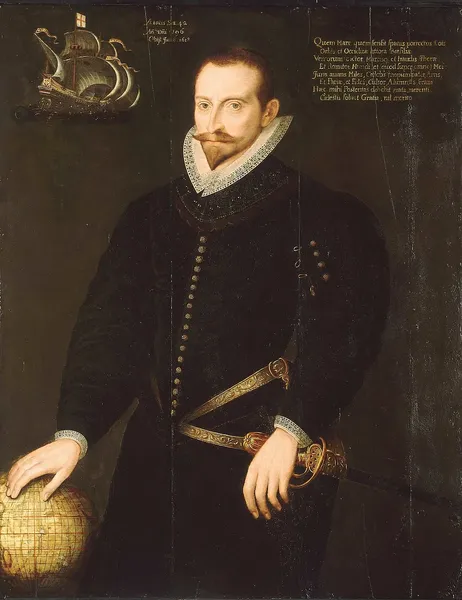
The 1601 East India Company Voyage was the first ever voyage by the newly formed English East India Company (EIC) and took place between February 1601 to August 1603 during the latter stage of the Anglo-Spanish War. The EIC had been established in 1600 with approval from Queen Elizabeth I, and a fleet of four ships was organised and led by veteran explorer James Lancaster. The voyage hoped to break the Spanish-Portuguese domination in the lucrative spice trade. The fleet set sail from England in February 1601 entering the Indian Ocean and East Indies the following year. The fleet visited Aceh, and Lancaster struck up a good relationship with the Aceh Sultanate, but the price of pepper and spice was too high. Looking elsewhere, a Portuguese carrack was captured with the help of a small Dutch squadron in the Straits of Malacca after a short fight. From the valuable plunder taken, the EIC was able to establish a factory at Banten on Java adding to the haul of goods acquired. Another smaller factory was set up on the small island of Run in the Spice Islands. Having secured the goods the fleet sailed on the return journey back to England. After nearly succumbing to storms and disease on the way, the fleet managed to make it back in September 1603 and Lancaster was knighted by the new King James I. The voyage was a huge success and eventually received a healthy profit, in addition the EIC had successfully breached the Spanish-Portuguese duopoly, allowing for further successful voyages. The establishment of the factories was instrumental for the birth the British Empire.
Also on this shelf
4BU Radio Station building.
Croswell Opera House.
See also
Uncatalogued shelfText from Wikipedia; plate via Wikimedia Commons. Text CC BY-SA 4.0; plate freely licensed (see Commons). Source record. Images and catalogue data are reproduced from open-access collections.