Maps and Exploration
Discovery Expedition
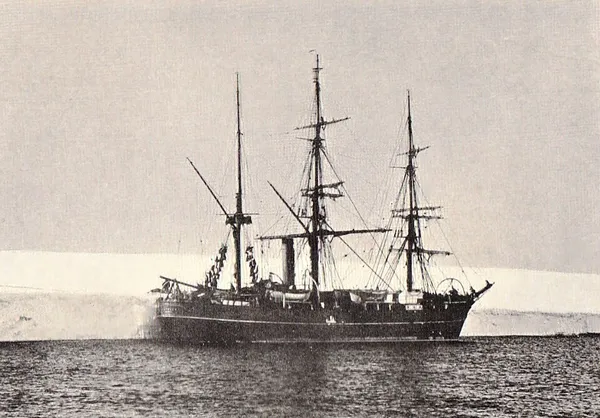
The Discovery Expedition of 1901–1904, known officially as the British National Antarctic Expedition, was the first official British exploration of the Antarctic regions since the voyage of James Clark Ross sixty years earlier (1839–1843). Organized on a large scale under a joint committee of the Royal Society and the Royal Geographical Society (RGS), the new expedition carried out scientific research and geographical exploration in what was then largely an untouched continent. It launched the Antarctic careers of many who would become leading figures in the Heroic Age of Antarctic Exploration, including Robert Falcon Scott who led the expedition, Ernest Shackleton, Edward Wilson, Frank Wild, Tom Crean and William Lashly. Its scientific results covered extensive ground in biology, zoology, geology, meteorology and magnetism. The expedition discovered the existence of the only snow-free Antarctic valleys, which contains the longest river of Antarctica. Further achievements included the discoveries of the Cape Crozier emperor penguin colony, King Edward VII Land, and the Polar Plateau (via the western mountains route) on which the South Pole is located. The expedition tried to reach the South Pole travelling as far as the Farthest South mark at a reported 82°17′S. As a trailbreaker for later ventures, the Discovery Expedition was a landmark in British Antarctic exploration history.
Also on this shelf
Hong Kong Disneyland.
Fort Jefferson (Ohio).
See also
Uncatalogued shelfText from Wikipedia; plate via Wikimedia Commons. Text CC BY-SA 4.0; plate freely licensed (see Commons). Source record. Images and catalogue data are reproduced from open-access collections.