Maps and Exploration
Guyana–Venezuela territorial dispute
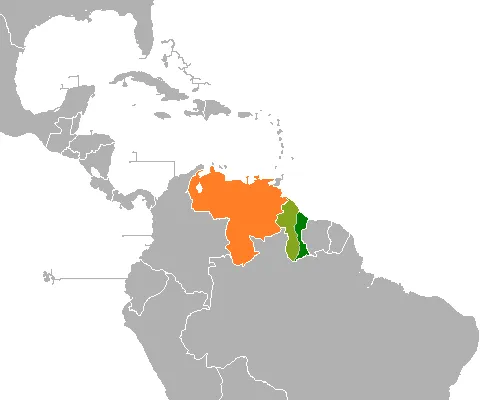
There is an ongoing territorial dispute between Guyana and Venezuela over the Essequibo region (Spanish: Guayana Esequiba; Spanish pronunciation: [ɡwaˈʝana eseˈkiβa] ), a 159,500 km2 (61,600 sq mi) area west of the Essequibo River and even parts south of it. The territory, excluding the Venezuelan-controlled Ankoko Island, is controlled by Guyana as part of six of its regions, based on the 1899 Paris Arbitral Award. It is also claimed by Venezuela as the Guayana Esequiba State. The boundary dispute, also known as the Essequibo conflict, which began under the colonial powers (Spain in the case of Venezuela, and the Netherlands and the United Kingdom in the case of Guyana) and has persisted following the independence of Gran Colombia and Guyana. As part of the Anglo-Dutch Treaty of 1814, arising from the Napoleonic Wars, the Netherlands ceded Essequibo to Great Britain. In 1835, the UK government commissioned German-born explorer and naturalist Robert Hermann Schomburgk to survey British Guiana's boundaries as the 1814 treaty did not define the western border. This survey resulted in what came to be known as the "Schomburgk Line", which was rejected by Venezuelan and British governments, as even the extended Schomburgk Line did not include the entire Cuyuní River basin which was claimed by Britain. After negotiations in the 1850s, the countries were unable to come to a settlement. Tensions worsened after the discovery of gold mines in the region in 1876, culminating with Venezuelan president Antonio Guzmán Blanco severing diplomatic relations with the United Kingdom in 1887. Venezuela then called upon the Monroe Doctrine, asking the USA to intervene on Venezuela's behalf. Under threat of a possible invasion from the United States, the United Kingdom agreed to an international arbitration by means of the 1897 Treaty of Washington. The arbitration resulted in the Paris Arbitral Award in 1899, a ruling largely in favour of Britain. There was little protest from Venezuela, likely due to outstanding loans to international allies and internal political upheaval. The matter was considered settled until 1949, when a posthumous memorandum by Severo Mallet-Prevost was published in the American Journal of International Law. Mallet-Prevost had been part of the US–Venezuela delegation in the arbitration.
Also on this shelf
Demographics of India.
Amos Adams House.
See also
Uncatalogued shelfText from Wikipedia; plate via Wikimedia Commons. Text CC BY-SA 4.0; plate freely licensed (see Commons). Source record. Images and catalogue data are reproduced from open-access collections.