Maps and Exploration
Climate change in Turkey
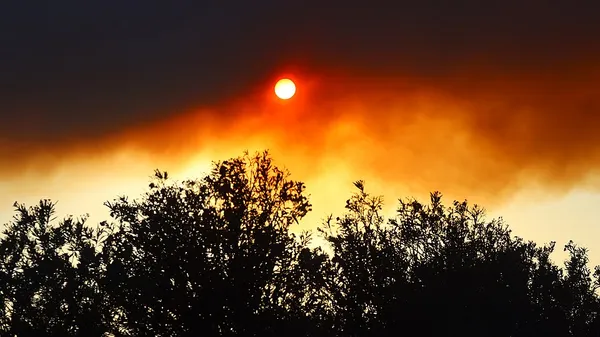
Heatwaves and droughts in Turkey are the main hazards due to its climate getting hotter. The temperature has risen in the 21st century, exceeding 50 °C (122 °F) in 2025, and there is more extreme weather. Due to differing geography effects vary across the country. Water supply to some cities is threatened. Turkey will host the 2026 United Nations Climate Change Conference and Murat Kurum says that climate finance is the most important issue. Turkey's annual greenhouse gas emissions are over 1% of the global total, and energy policy includes subsidizing both fossil gas and coal. Per person emissions since the late-2010s have varied around six and a half tonnes a year, which is about the global average. However historical emissions are less than 1% of the global total. The Directorate of Climate Change co-ordinates adaptation to climate change, which has been planned for water resources by river basin, and for agriculture. Certificate caps in the emission trading system are unclear as of 2026. Housing is not energy efficient, the pathway to the 2053 net zero target is unclear, and there is no plan for coal phase-out.
Also on this shelf
Beeskow.
Arthur Harry Blissett.
See also
Uncatalogued shelfText from Wikipedia; plate via Wikimedia Commons. Text CC BY-SA 4.0; plate freely licensed (see Commons). Source record. Images and catalogue data are reproduced from open-access collections.