Invention and Engineering
Highland Clearances
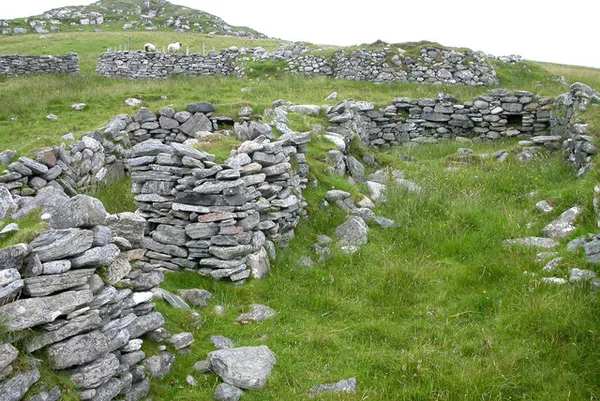
The Highland Clearances (Scottish Gaelic: Fuadaichean nan Gàidheal [ˈfuət̪ɪçən nəŋ ˈɡɛː.əl̪ˠ], the "eviction of the Gaels") were the evictions of a significant number of tenants in the Scottish Highlands and Islands, mostly in two phases from 1750 to 1860. The first phase resulted from agricultural improvement, driven by the desire for landlords to increase their income – many had substantial debts, with actual or potential bankruptcy being a large part of the reason for the clearances. This involved the enclosure of the open fields managed on the run rig system and shared grazing. These were usually replaced with large-scale pastoral farms on which much higher rents were paid. The displaced tenants were expected to be employed in industries such as fishing, quarrying, or kelp harvesting and processing. Their reduction in social status from farmer to crofter was one of the causes of resentment. The second phase involved overcrowded crofting communities from the first phase that had lost the means to support themselves, through famine or the collapse of industries on which they had relied. "Assisted passages" became common, when landowners paid the fares for their tenants to emigrate. Tenants who were selected for this had, in practical terms, little choice but to emigrate. The Highland Potato Famine struck towards the end of this period, giving greater urgency to the process. The eviction of tenants went against dùthchas, the principle that clan members had an inalienable right to rent land in the clan territory. This was never recognised in Scottish law. It was gradually abandoned by clan chiefs as they began to think of themselves simply as commercial landlords, rather than as patriarchs of their people—a process that arguably started with the Statutes of Iona of 1609. The clan members continued to rely on dùthchas. This difference in viewpoints was an inevitable source of grievance. The actions of landlords varied. Some did try to delay or limit evictions, often to their financial cost. The Countess of Sutherland genuinely believed her plans were advantageous for those resettled in crofting communities and could not understand why tenants complained. However, a few landlords displayed complete lack of concern for evicted tenants.
Also on this shelf
Aviation.
GNR Class C1 (small boiler).
See also
Uncatalogued shelfText from Wikipedia; plate via Wikimedia Commons. Text CC BY-SA 4.0; plate freely licensed (see Commons). Source record. Images and catalogue data are reproduced from open-access collections.