Invention and Engineering
History of the LED
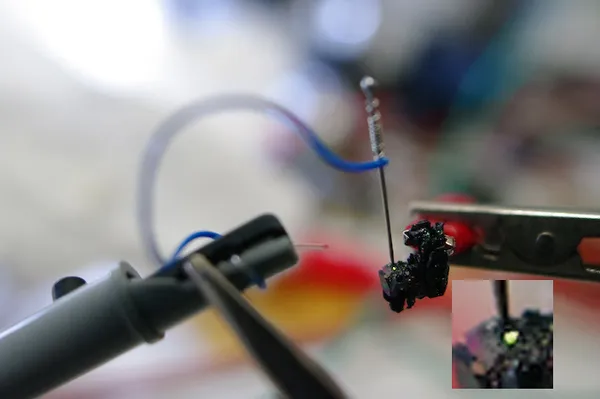
The history of the light-emitting diode begins with the 1906 discovery of electroluminescence from a solid state diode by Henry Joseph Round. In 1927, Russian inventor Oleg Losev created the first LED. The first practical LED was developed in 1961 by researchers at Texas Instruments. The 1970s saw the first commercial LEDs. In the early 1990s, Shuji Nakamura, Hiroshi Amano and Isamu Akasaki invented blue LEDs that were dramatically more efficient than their predecessors, bringing a new generation of bright, energy-efficient white lighting and full-color LED displays into practical use, work that won them the 2014 Nobel Prize in Physics.
Also on this shelf
Centrifugal governor.
Giovanni Agnelli (entrepreneur, born 1866).
See also
Uncatalogued shelfText from Wikipedia; plate via Wikimedia Commons. Text CC BY-SA 4.0; plate freely licensed (see Commons). Source record. Images and catalogue data are reproduced from open-access collections.