Invention and Engineering
Baldwin 60000
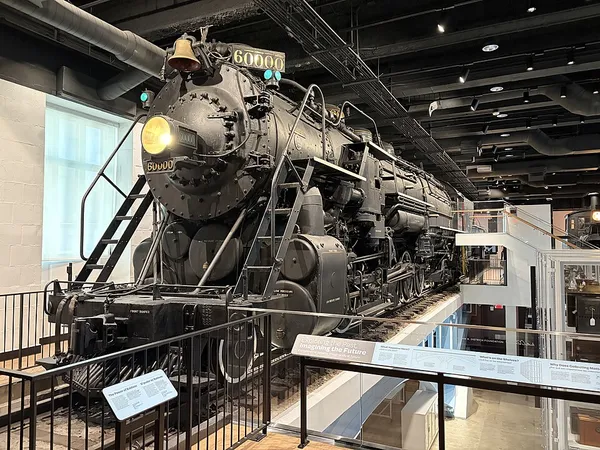
Baldwin 60000 is a one-off experimental steam locomotive built by the Baldwin Locomotive Works in Eddystone, Pennsylvania, in 1926, during the height of the railroading industry. It received its number for being the 60,000th locomotive built by Baldwin. It was designed to be the best locomotive that Baldwin ever made. It has three cylinders, weighs about 350 short tons (318 t; 313 long tons), including tender, and can pull a load of up to 7,000 short tons (6,400 t; 6,200 long tons). Its top speed is 70 mph (110 km/h). 60000 was highly innovative, carrying unusual technology such as a water-tube firebox. This was intended to improve efficiency but the tubes were prone to burst inside the firebox. It is also a compound, expanding the steam once in the inside cylinder and then again in the two outside cylinders. Although compounding increases efficiency, it was an extra complication that the US railroads had mostly rejected by the middle twenties. The weight and length of the engine were too much for all but the heaviest and straightest tracks. This locomotive was experimental and was meant to be the model for future development. However, its demonstration runs never persuaded railroads to purchase more. In 1933, it was donated to the Franklin Institute Science Museum in Philadelphia, Pennsylvania and remains there today.
Also on this shelf
Alexis Carrel.
Caledonian Railway Single.
See also
Uncatalogued shelfText from Wikipedia; plate via Wikimedia Commons. Text CC BY-SA 4.0; plate freely licensed (see Commons). Source record. Images and catalogue data are reproduced from open-access collections.