Invention and Engineering
Economic history of the United Kingdom
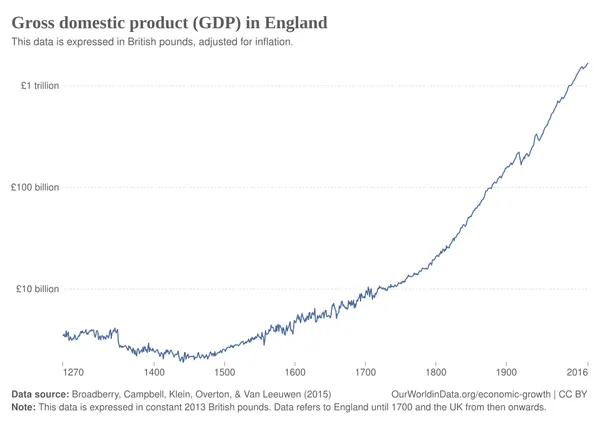
The economic history of the United Kingdom relates the economic development in the British state from the absorption of Wales into the Kingdom of England after 1535 to the modern United Kingdom of Great Britain and Northern Ireland of the early 21st century. Scotland and England (including Wales, which had been treated as part of England since 1536) shared a monarch from 1603 but their economies were run separately until they were unified in the Act of Union 1707. Ireland was incorporated in the United Kingdom of Great Britain and Ireland economy between 1800 and 1922; from 1922 the Irish Free State (the modern Republic of Ireland) became independent and set its own economic policy. Great Britain, and England in particular, became one of the most prosperous economic regions in the world between the late 1600s and early 1800s as a result of being the birthplace of the Industrial Revolution that began in the mid-eighteenth century. The developments brought by industrialisation resulted in Britain becoming the premier European and global economic, political, and military power for more than a century. As the first to industrialise, Britain's industrialists revolutionised areas like manufacturing, communication, and transportation through innovations such as the steam engine (for pumps, factories, railway locomotives and steamships), textile equipment, tool-making, the Telegraph, and pioneered the railway system. With these many new technologies Britain manufactured much of the equipment and products used by other nations, becoming known as the "workshop of the world". Its businessmen were leaders in international commerce and banking, trade and shipping. Its markets included both areas that were independent and those that were part of the rapidly expanding British Empire, which by the early 1900s had become the largest empire in history. After 1840, the economic policy of mercantilism was abandoned and replaced by free trade, with fewer tariffs, quotas or restrictions, first outlined by British economist Adam Smith's Wealth of Nations.
Also on this shelf
Barrel.
Inkjet technology.
See also
Uncatalogued shelfText from Wikipedia; plate via Wikimedia Commons. Text CC BY-SA 4.0; plate freely licensed (see Commons). Source record. Images and catalogue data are reproduced from open-access collections.