Invention and Engineering
Dragline excavator
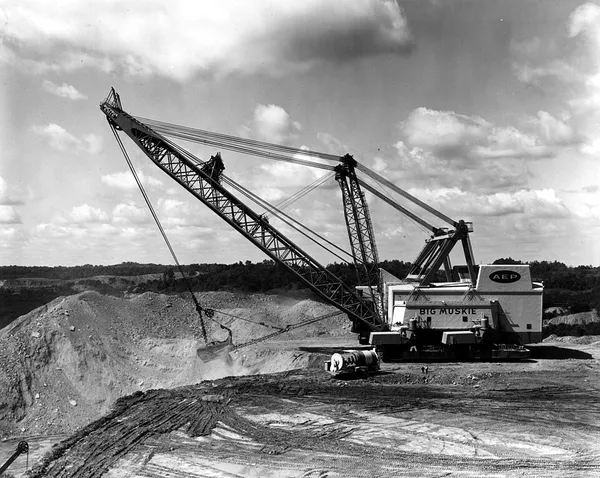
A dragline excavator is a heavy-duty excavator used in civil engineering and surface mining. It was invented in 1904, and presented an immediate challenge to the steam shovel and its diesel and electric powered descendant, the power shovel. Much more efficient than even the largest of the latter, it enjoyed a heyday in extreme size for most of the 20th century, first becoming challenged by more efficient rotary excavators in the 1950s, then superseded by them from the upper end from the 1970s onward. The largest ever walking dragline was Big Muskie, a Bucyrus-Erie 4250-W put online in 1969 that swung a 220 yd3 (170 m3), 295-metric ton (325 short ton) capacity bucket, had a 310 feet (94 m) boom, and weighed 12,247 metric tons (13,500 short tons). The largest walking dragline produced as of 2014 was Joy Global’s digital AC drive control P&H 9020XPC, which has a bucket capacity of 110–160 yd3 (84–122 m3) and boom lengths ranging from 325–425 ft (99–130 m); working weights vary between 7,539 and 8,002 tons.
Also on this shelf
Bellingham, Washington.
Chain drive.
See also
Uncatalogued shelfText from Wikipedia; plate via Wikimedia Commons. Text CC BY-SA 4.0; plate freely licensed (see Commons). Source record. Images and catalogue data are reproduced from open-access collections.