Invention and Engineering
Invention of radio
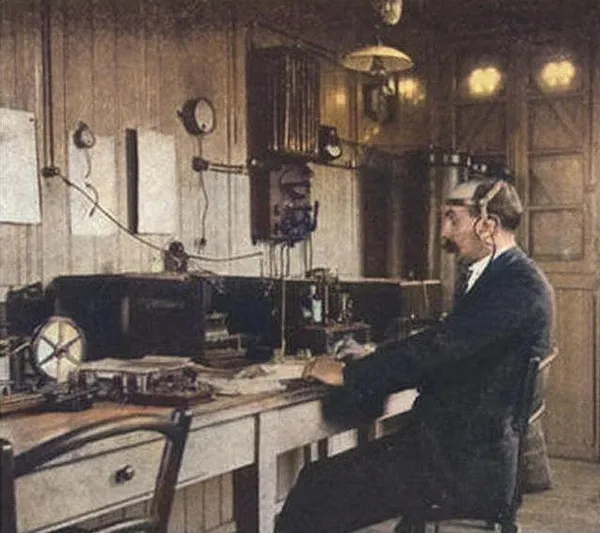
The invention of radio communication was preceded by many decades of establishing theoretical underpinnings, discovery and experimental investigation of radio waves, and engineering and technical developments related to their transmission and detection. These developments allowed Guglielmo Marconi to turn radio waves into a wireless communication system. The idea that the wires needed for electrical telegraph could be eliminated, creating a wireless telegraph, had been around for a while before the establishment of radio-based communication. Inventors attempted to build systems based on electric conduction, electromagnetic induction, or on other theoretical ideas. Several inventors/experimenters came across the phenomenon of radio waves before its existence was proven; it was written off as electromagnetic induction at the time. The discovery of electromagnetic waves, including radio waves, by Heinrich Hertz in the 1880s came after theoretical development on the connection between electricity and magnetism that started in the early 1800s. This work culminated in a theory of electromagnetic radiation developed by James Clerk Maxwell by 1873, which Hertz demonstrated experimentally. Hertz considered electromagnetic waves to be of little practical value. Other experimenters, such as Oliver Lodge and Jagadish Chandra Bose, explored the physical properties of electromagnetic waves, and they developed electric devices and methods to improve the transmission and detection of electromagnetic waves. But they did not apparently see the value in developing a communication system based on electromagnetic waves. In the mid-1890s, building on techniques physicists were using to study electromagnetic waves, Guglielmo Marconi developed the first apparatus for long-distance radio communication. On 23 December 1900, the Canadian-born American inventor Reginald A. Fessenden became the first person to send audio (wireless telephony) by means of electromagnetic waves, successfully transmitting over a distance of about a mile (1.6 kilometers,) and six years later on Christmas Eve 1906 he became the first person to make a public wireless broadcast. By 1910, these various wireless systems had come to be called "radio".
Also on this shelf
Christopher Polhem.
G&SWR 11 Class.
See also
Uncatalogued shelfText from Wikipedia; plate via Wikimedia Commons. Text CC BY-SA 4.0; plate freely licensed (see Commons). Source record. Images and catalogue data are reproduced from open-access collections.