Invention and Engineering
Economy of Germany
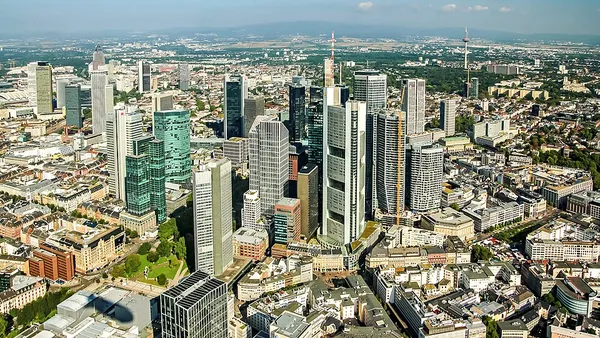
Germany has a social market economy. As the largest economy in Europe by nominal GDP, Germany's highly developed economy is the third-largest by nominal GDP in the world, as well as the sixth-largest by PPP-adjusted GDP. Due to a volatile currency exchange rate, Germany's GDP as measured in dollars fluctuates sharply, but has ranked among the world's top four since 1960. In 2025, Germany accounted for 23.7% of the economy in the eurozone, with which it has achieved a high degree of economic integration. With a population of around 83,000,000 people, Germany represents the largest consumer market in the European Union. It is a founding member of both the European Union and the Eurozone. Germany is the third-largest exporter globally, with $1.66 trillion worth of goods and services exported in 2024. In 2024, Germany recorded a trade surplus of $255 billion, ranking 2nd worldwide. The service sector contributes around 70% of the total GDP, industry 29.1%, and agriculture 0.9%. Exports account for 50.3% of national output. The main exports of Germany are vehicles, machinery, chemicals, electronics, electrical equipment, pharmaceuticals, transport equipment, basic metals, food products, rubber, and plastics. Germany possesses the largest manufacturing economy in Europe, contributing around one third of all manufacturing in Europe, though its manufacturing industry has experienced a decline in the 2020s. The Germany social security system comprises roughly 25% of GDP, which is high among OECD members. Germany has the world's second-largest gold reserves, with over 3,000 tonnes of gold. As of 2023, Germany spends around 3.1% of GDP, third among major economies, on research and development. It is also the world's second-largest high-technology exporter and ranks in the top 10 of countries by stock market capitalization. Nearly all German companies belong to the German Mittelstand, mostly family-owned small and medium-sized enterprises. These companies represent 48% of the global market leaders in their segments, labelled hidden champions. However, the Mittelstand have experienced a significant downturn in the 2020s due to competition from China. Of the world's 500 largest publicly listed companies measured by revenue, the Fortune Global 500, 29 are headquartered in Germany, as are 26 of Europe's 100 largest.
Also on this shelf
Brunel Museum.
Cow tipping.
See also
Uncatalogued shelfText from Wikipedia; plate via Wikimedia Commons. Text CC BY-SA 4.0; plate freely licensed (see Commons). Source record. Images and catalogue data are reproduced from open-access collections.