Invention and Engineering
Agriculture in the United States
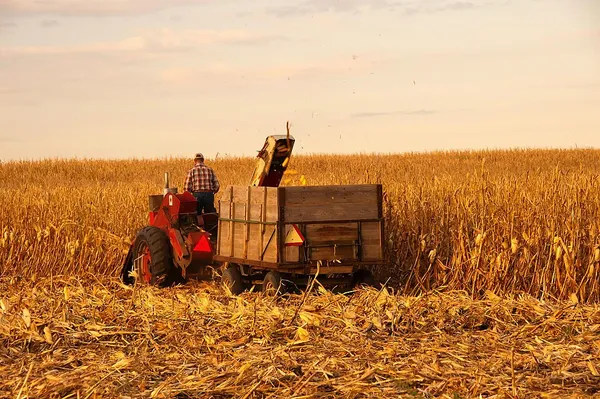
Agriculture is a major industry in the United States, which is a net exporter of food. As of the 2022 census of agriculture, there were 1.9 million farms (down 6.9% from 2017), covering an area of 880.1 million acres, an average of 463 acres per farm. Agricultural activity is particularly concentrated in the Central Valley of California and the Great Plains. The Great Plains are a vast expanse of flat arable land in the center of the nation covering an area west of the Great Lakes and east of the Rocky Mountains. The eastern wetter half is a major corn- and soybean-producing region known as the Corn Belt, and the western drier half is known as the Wheat Belt because of its high rate of wheat production. The Central Valley of California produces fruits, vegetables, and nuts. The American South has historically been a large producer of cotton, tobacco, and rice, but it has declined in agricultural production over the past century. California leads the nation in citrus production and is the number two producer of oranges in the world behind only Brazil. The U.S. has led developments in seed improvement, such as hybridization, and in expanding uses for crops from the work of George Washington Carver to bioplastics and biofuels. The mechanization of farming and intensive farming have been major themes in U.S. history, including John Deere's steel plow, Cyrus McCormick's mechanical reaper, Eli Whitney's cotton gin, and the widespread success of the Fordson tractor and the combine harvester. Modern agriculture in the U.S. ranges from hobby farms and small-scale producers to large commercial farms that cover thousands of acres of cropland or rangeland.
Also on this shelf
Blackford County, Indiana.
Baldwin AS-16.
See also
Uncatalogued shelfText from Wikipedia; plate via Wikimedia Commons. Text CC BY-SA 4.0; plate freely licensed (see Commons). Source record. Images and catalogue data are reproduced from open-access collections.