Invention and Engineering
Jackshaft (locomotive)
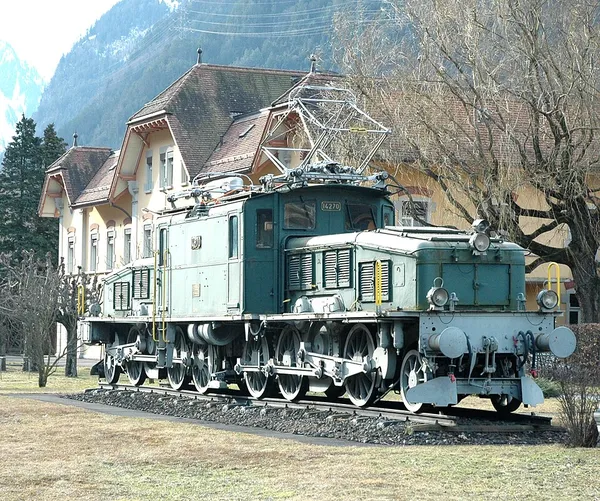
A jackshaft is an intermediate shaft used to transfer power from a powered shaft such as the output shaft of an engine or motor to driven shafts such as the drive axles of a locomotive. As applied to railroad locomotives in the 19th and 20th centuries, jackshafts were typically in line with the drive axles of locomotives and connected to them by side rods. In general, each drive axle on a locomotive is free to move about one inch (2.5 cm) vertically relative to the frame, with the locomotive weight carried on springs. This means that if the engine, motor or transmission is rigidly attached to the locomotive frame, it cannot be rigidly connected to the axle. This problem can be solved by mounting the jackshaft on unsprung bearings and using side-rods or (in some early examples) chain drives. Jackshafts were first used in early steam locomotives, although the designers did not yet call them by that name. In the early 20th century, large numbers of jackshaft-driven electric locomotives were built for heavy mainline service. Jackshaft drives were also used in many early gasoline and diesel locomotives that used mechanical transmissions.
Also on this shelf
List of Italian inventions and discoveries.
Cornish engine.
See also
Uncatalogued shelfText from Wikipedia; plate via Wikimedia Commons. Text CC BY-SA 4.0; plate freely licensed (see Commons). Source record. Images and catalogue data are reproduced from open-access collections.