Invention and Engineering
Disruptive innovation
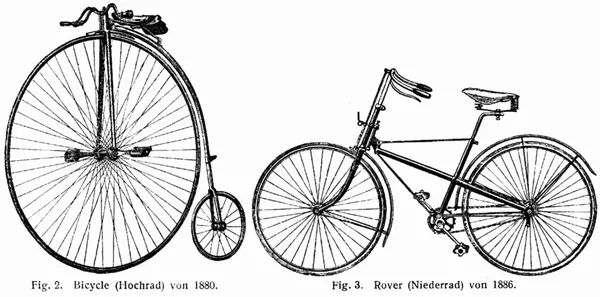
In business theory, disruptive innovation is innovation that creates a new market and value network or enters at the bottom of an existing market and eventually displaces established market-leading firms, products, and alliances. In theory, disruptive innovation makes it hard for leading firms to stay at the top of their industry. The term, "disruptive innovation" was popularized by the American academic Clayton Christensen and his collaborators beginning in 1995. Not all innovations are disruptive, even if they are revolutionary. For example, the first automobiles in the late 19th century were not a disruptive innovation, because early automobiles were expensive luxury items that did not disrupt the market for horse-drawn vehicles. However, the mass-produced automobile was a disruptive innovation, because it changed the transportation market, whereas the first thirty years of automobiles did not. Disruptive innovations tend to be produced by outsiders and entrepreneurs in startups, rather than existing market-leading companies. The business environment of market leaders does not allow them to pursue disruptive innovations when they first arise, because they are not profitable enough at first and because their development can take scarce resources away from sustaining innovations (which are needed to compete against current competition). Small teams are more likely to create disruptive innovations than large teams. A disruptive process can take longer to develop than by the conventional approach and the risk associated with it is higher than the other more incremental, architectural or evolutionary forms of innovations, but once it is deployed in the market, it achieves a much faster penetration and higher degree of impact on the established markets.
Also on this shelf
Galileo Ferraris.
Elbrus (computer).
See also
Uncatalogued shelfText from Wikipedia; plate via Wikimedia Commons. Text CC BY-SA 4.0; plate freely licensed (see Commons). Source record. Images and catalogue data are reproduced from open-access collections.