Invention and Engineering
Anti-submarine warfare
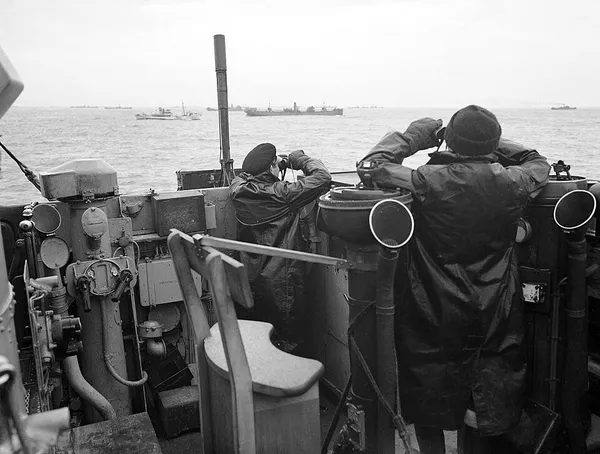
Anti-submarine warfare (ASW, or in the older form A/S) is a branch of underwater warfare that uses surface warships, aircraft, submarines, or other platforms, to find, track, and deter, damage, or destroy enemy submarines. Such operations are typically carried out to protect friendly shipping and coastal facilities from submarine attacks and to overcome blockades. Successful ASW operations typically involve a combination of sensor and weapon technologies, along with effective deployment strategies and sufficiently trained personnel. Typically, sophisticated sonar equipment is used for first detecting, then classifying, locating, and tracking a target submarine. Sensors are therefore a key element of ASW. Common weapons for attacking submarines include torpedoes and naval mines, which can both be launched from an array of air, surface, and underwater platforms. ASW capabilities are often considered of significant strategic importance, particularly following provocative instances of unrestricted submarine warfare and the introduction of submarine-launched ballistic missiles, which greatly increased the lethality of submarines. At the beginning of the 20th century, ASW techniques and submarines themselves were primitive. During the First World War, submarines deployed by Imperial Germany proved themselves to be a capable threat to shipping, being able to strike targets even out in the North Atlantic Ocean. Accordingly, multiple nations embarked on research into devising more capable ASW methods, resulting in the introduction of practical depth charges and advances in sonar technology; the adoption of the convoy system also proved to be a decisive tactic. After a lull in progress during the interwar period, the Second World War saw submarine warfare and ASW alike advance rapidly, particularly during the critical Battle of the Atlantic, during which Axis submarines sought to prevent Britain from effectively importing supplies. Techniques such as the Wolfpack achieved initial success, but became increasingly costly as more capable ASW aircraft were introduced. Technologies such as the Naxos radar detector gained only a temporary reprieve until detection apparatus advanced yet again.
Also on this shelf
GNR Class N2.
Electric Loco Shed, Arakkonam.
See also
Uncatalogued shelfText from Wikipedia; plate via Wikimedia Commons. Text CC BY-SA 4.0; plate freely licensed (see Commons). Source record. Images and catalogue data are reproduced from open-access collections.