Invention and Engineering
Fermi paradox
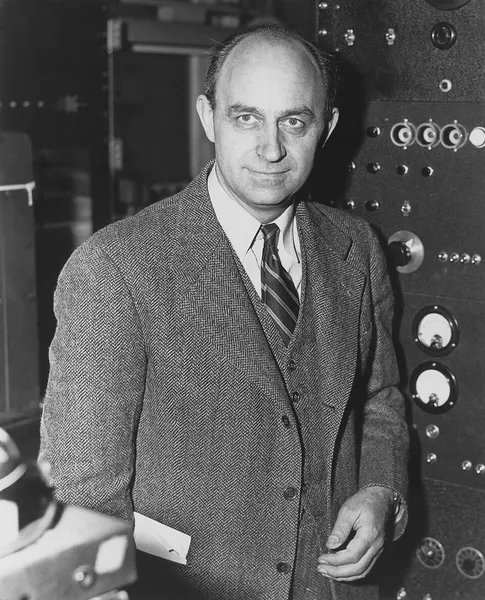
The Fermi paradox is the seeming inconsistency between the lack of evidence of extraterrestrial civilizations and the apparently high likelihood of their existence. In simple terms, the Fermi paradox asks why, given the vast number of stars and potentially habitable planets in our observable universe, there is no clear evidence of extraterrestrial civilizations. The paradox is named after physicist Enrico Fermi who blurted out the question—remembered by Emil Konopinski as "But where is everybody?"—during lunchtime after the conversation had already moved on to other topics. This happened at Los Alamos in 1950 with colleagues Konopinski, Edward Teller, and Herbert York. The paradox first appeared in print in a 1963 paper by Carl Sagan, and the paradox has since been more fully described by scientists. Early formulations of the paradox have also been identified in writings by Bernard Le Bovier de Fontenelle (1686) and Jules Verne (1865), and by Soviet rocket scientist Konstantin Tsiolkovsky (1933). There have been many attempts to resolve the Fermi paradox, such as suggesting that intelligent extraterrestrial beings are extremely rare, that the lifetime of such civilizations is short, or that they exist but (for various reasons) humans see no evidence.
Also on this shelf
Aeronautics.
GCR Class 9J.
See also
Uncatalogued shelfText from Wikipedia; plate via Wikimedia Commons. Text CC BY-SA 4.0; plate freely licensed (see Commons). Source record. Images and catalogue data are reproduced from open-access collections.