Invention and Engineering
AEG (German company)
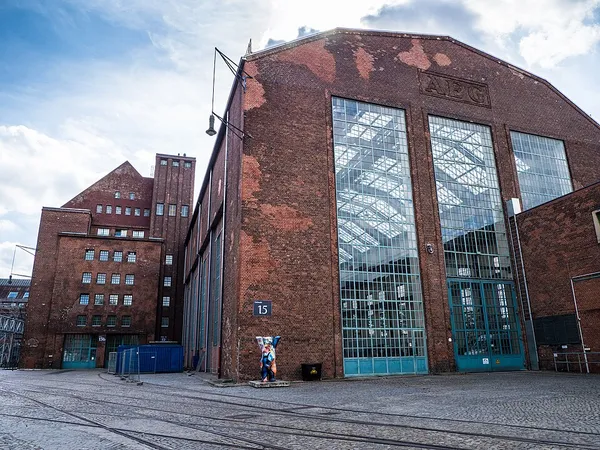
AEG (Allgemeine Elektrizitäts-Gesellschaft lit. "General Electricity Company") was a German electrical equipment manufacturer founded in 1883 by Emil Rathenau in Berlin. While the company is officially defunct as of 1996, the brand is currently owned (since 2005) and used by Swedish company Electrolux, which also licenses it to various brand partners. The company's initial focus was driven by electrical lighting, as in 1881, Rathenau had acquired the rights to the electric light bulb at the International Exposition of Electricity in Paris. Using small power stations, his company introduced electrical lighting to cafés, restaurants, and theaters, despite the high costs and limitations. By the end of the 19th century, AEG had constructed 248 power stations, providing a total of 210,000 hp of electricity for lighting, tramways, and household devices. During the Second World War, AEG worked with the Nazi Party and benefited from forced labor in Nazi concentration camps. After the war, its headquarters moved to Frankfurt am Main. In 1967, AEG joined with its subsidiary Telefunken. In 1982, AEG-Telefunken had to file for bankruptcy, after which in 1985, Daimler-Benz purchased AEG. The company was eventually carved up in the 1990s: after its naval, radar and defense electronics became part of Deutsche Aerospace, its rail infrastructure became part of Adtranz, its electrical grid business sold to GEC Alsthom, and other divisions sold to others. Its diesel engine division, automotive electronics and postal automation parts were directly integrated into Daimler-Benz, and AEG formally dissolved in 1996.
Also on this shelf
Charles Bachman.
2-6-2.
See also
Uncatalogued shelfText from Wikipedia; plate via Wikimedia Commons. Text CC BY-SA 4.0; plate freely licensed (see Commons). Source record. Images and catalogue data are reproduced from open-access collections.