Invention and Engineering
Economy of Bulgaria
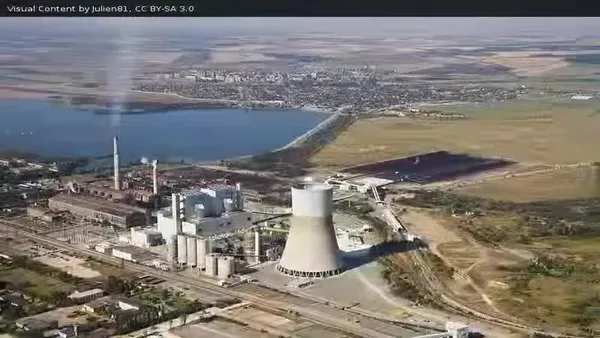
The economy of Bulgaria functions on the principles of the free market, having a large private sector and a smaller public one. Bulgaria has an advanced, high-income economy according to the International Monetary Fund and the World Bank. It is a member of the European Union (EU), the World Trade Organization (WTO) and the Organization of the Black Sea Economic Cooperation (BSEC). The Bulgarian economy has experienced significant growth (538%), starting from $13.15 billion (nominal, 2000) and reaching estimated gross domestic product (GDP) of $107 billion (nominal, 2024 est.) or $229 billion (PPP, 2024 est.), GDP per capita of $36,000 (PPP, 2024 est.), average gross monthly salary of 2,468 leva (1,262 euro) (December 2024), and average net monthly salary of $2,191 (adjusted for living costs in PPP) (Q2 2024). Until 2026, the national currency was the lev (plural leva), pegged to the euro at 1.95583 leva for 1 euro. The lev was one of the strongest and most stable currencies in Eastern Europe. On 1 January 2026, Bulgaria adopted the euro and became a member of the Eurozone. The strongest sectors in the economy are energy, mining, metallurgy, machine building, agriculture and tourism. Primary industrial exports are clothing, iron and steel, machinery and refined fuels. Sofia is the capital and economic heart of Bulgaria and home to most major Bulgarian and international companies operating in the country, as well as the Bulgarian National Bank and the Bulgarian Stock Exchange. Varna is the third largest city in Bulgaria and the largest city on the Black Sea in Bulgaria. The Bulgarian economy has developed significantly in the last 26 years, despite difficulties following the disbandment of Comecon in 1991. In the early 1990s, the country's slow pace of privatization, contradictory government tax and investment policies, and bureaucratic red tape kept foreign direct investment (FDI) among the lowest in the region. Total FDI from 1991 through 1996 was $831 million. In December 1996, Bulgaria joined the World Trade Organization. In the years since 1997, Bulgaria has begun to attract substantial foreign investment. In 2004 alone, over 2.72 billion euro ($3.47 billion) were invested by foreign companies.
Also on this shelf
Eddystone Lighthouse.
Forensic engineering.
See also
Uncatalogued shelfText from Wikipedia; plate via Wikimedia Commons. Text CC BY-SA 4.0; plate freely licensed (see Commons). Source record. Images and catalogue data are reproduced from open-access collections.