Invention and Engineering
History of wind power
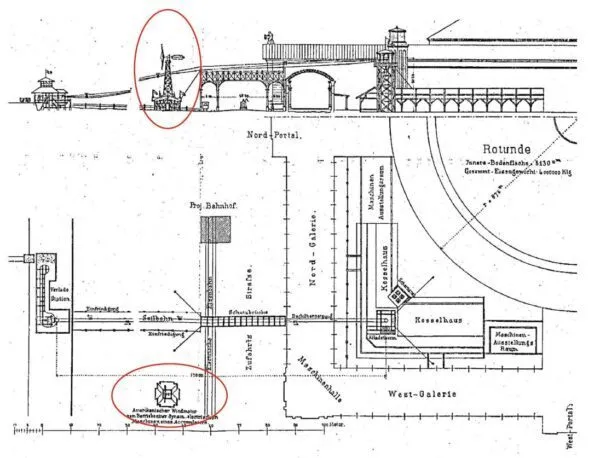
Wind power has been used as long as humans have put sails into the wind. Wind-powered machines used to grind grain and pump water – the windmill and wind pump — were developed in what is now Iran, Afghanistan, and Pakistan by the 9th century. Wind power was widely available and not confined to the banks of fast-flowing streams, or later, requiring sources of fuel. Wind-powered pumps drained the polders of the Netherlands, and in arid regions such as the American midwest or the Australian outback, wind pumps provided water for livestock and steam engines. With the development of electric power, wind power found new applications in lighting buildings remote from centrally generated power. Throughout the 20th century, parallel paths developed small wind plants suitable for farms or residences and larger utility-scale wind generators that could be connected to electricity grids for remote use of power. Wind-powered generators operate in sizes ranging between tiny plants for battery charging at isolated residences up to near-gigawatt sized offshore wind farms that provide electricity to national electrical networks. The first electricity-generating wind turbine was installed by the Austrian Josef Friedländer at the Vienna International Electrical Exhibition in 1883, followed by wind generators, e.g., in Scotland in July 1887 by Prof James Blyth of Anderson's College, Glasgow (the precursor of Strathclyde University). Blyth's 10 metres (33 ft) high cloth-sailed wind turbine was installed in the garden of his holiday cottage at Marykirk in Kincardineshire, and was used to charge accumulators developed by the Frenchman Camille Alphonse Faure to power the lighting in the cottage, thus making it the first house in the world to have its electric power supplied by wind power. Blyth offered the surplus electric power to the people of Marykirk for lighting the main street; however, they turned down the offer, as they thought electric power was "the work of the devil." Although he later built a wind turbine to supply emergency power to the local Lunatic Asylum, Infirmary, and Dispensary of Montrose, the invention never really caught on, as the technology was not considered to be economically viable. Across the Atlantic, in Cleveland, Ohio, a larger and heavily engineered machine was designed and constructed in the winter of 1887–1888 by Charles F. Brush.
Also on this shelf
Flued boiler.
John G. Trump.
See also
Uncatalogued shelfText from Wikipedia; plate via Wikimedia Commons. Text CC BY-SA 4.0; plate freely licensed (see Commons). Source record. Images and catalogue data are reproduced from open-access collections.