Invention and Engineering
Ceiling fan
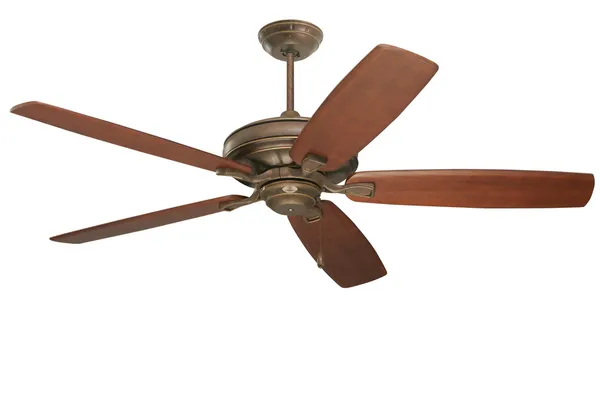
A ceiling fan is a fan mounted on the ceiling of a room or space, usually electrically powered, that uses hub-mounted rotating blades to circulate air. They cool people effectively by increasing air speed. Fans do not reduce air temperature or relative humidity, unlike air-conditioning equipment, but create a cooling effect by helping to evaporate sweat and increase heat exchange via convection. Fans add a small amount of heat to the room mainly due to waste heat from the motor, and partially due to friction. Fans use significantly less power than air conditioning as cooling air is thermodynamically expensive. In the winter, fans move warmer air, which naturally rises, back down to occupants. This can affect both thermostat readings and occupants' comfort, thereby improving the energy efficiency of climate control. Many ceiling fan units also double as light fixtures, eliminating the need for separate overhead lights in a room.
Also on this shelf
Electrical telegraphy in the United Kingdom.
Canadian Pacific 972.
See also
Uncatalogued shelfText from Wikipedia; plate via Wikimedia Commons. Text CC BY-SA 4.0; plate freely licensed (see Commons). Source record. Images and catalogue data are reproduced from open-access collections.