Invention and Engineering
Corliss steam engine
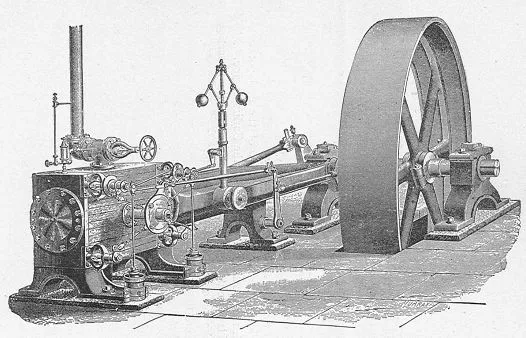
A Corliss steam engine (or Corliss engine) is a steam engine, fitted with rotary valves and with variable valve timing patented in 1849, invented by and named after the US engineer George Henry Corliss of Providence, Rhode Island. Corliss assumed the original invention from Frederick Ellsworth Sickels (1819- 1895), who held the patent (1829) in the US patent office. Engines fitted with Corliss valve gear offered the best thermal efficiency of any type of stationary steam engine until the refinement of the uniflow steam engine and steam turbine in the 20th century. Corliss engines were generally about 30 percent more fuel efficient than conventional steam engines with fixed cutoff. This increased efficiency made steam power more economical than water power, allowing industrial development away from millponds. Corliss engines were typically used as stationary engines to provide mechanical power to line shafting in factories and mills and to drive dynamos to generate electricity. Many were quite large, standing many metres tall and developing several hundred horsepower, albeit at low speed, turning massive flywheels weighing several tons at about 100 revolutions per minute. Some of these engines have unusual roles as mechanical legacy systems and because of their relatively high efficiency and low maintenance requirements, some remain in service into the early 21st century. See, for example, the engines at the Hook Norton Brewery and the Distillerie Dillon in the list of operational engines.
Also on this shelf
Electric Loco Shed, Angul.
Box.
See also
Uncatalogued shelfText from Wikipedia; plate via Wikimedia Commons. Text CC BY-SA 4.0; plate freely licensed (see Commons). Source record. Images and catalogue data are reproduced from open-access collections.