Invention and Engineering
Education in the United States
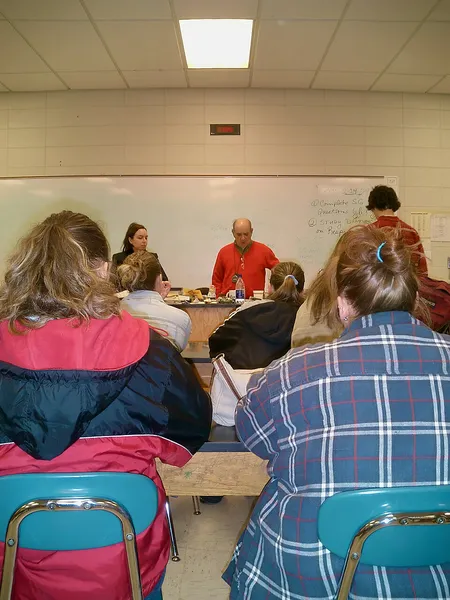
The United States does not have a unified national or federal educational system. Although there are more than fifty independent systems of education (one run by each state and territory, the Bureau of Indian Education, and the Department of Defense Dependents Schools), there are a number of similarities between them. Education is provided in public and private schools and by individuals through homeschooling. Educational standards are set at the state or territory level by the supervising organization, usually a board of regents, state department of education, state colleges, or a combination of systems. The bulk of the $1.3 trillion in funding comes from state and local governments, with federal funding accounting for about $250.2 billion in 2024 compared to around $200 billion in past years. During the late 18th and early 19th centuries, most schools in the United States did not mandate regular attendance. In many areas, students attended school for no more than three to four months out of the year. By state law, education is compulsory over an age range starting between five and eight and ending somewhere between ages sixteen and nineteen, depending on the state. This requirement can be satisfied in public or state-certified private schools, or an approved home school program. Compulsory education is divided into three levels: elementary school, middle or junior high school, and high school. As of 2013, about 87% of school-age children attended state-funded public schools, about 10% attended tuition and foundation-funded private schools, and roughly 3% were home-schooled. Enrollment in public kindergartens, primary schools, and secondary schools declined by 4% from 2012 to 2022 and enrollment in private schools or charter schools for the same age levels increased by 2% each. Numerous publicly and privately administered colleges and universities offer a wide variety of post-secondary education. Post-secondary education is divided into college, as the first tertiary degree, and graduate school. Higher education includes public and private research universities, usually private liberal arts colleges, community colleges, for-profit colleges, and many other kinds and combinations of institutions. College enrollment rates in the United States have increased over the long term. At the same time, student loan debt has also risen to $1.5 trillion.
Also on this shelf
Aeolipile.
Fan (machine).
See also
Uncatalogued shelfText from Wikipedia; plate via Wikimedia Commons. Text CC BY-SA 4.0; plate freely licensed (see Commons). Source record. Images and catalogue data are reproduced from open-access collections.